Delightful Sourdough Dutch Baby: A Heavenly Treat
This Sourdough Dutch Baby is a puffy, golden pancake that turns sourdough discard into a truly special brunch. Surprisingly simple and quick to make, it transforms basic ingredients into a joyful, show-stopping breakfast.
Why You’ll Absolutely Love This Recipe
- Effortlessly Impressive: It looks gourmet and complex, but it’s incredibly easy to make with minimal hands-on time.
- Sourdough Discard Hero: This recipe uses a generous amount of sourdough discard, making it a fantastic way to utilize your extra starter.
- Flavorful & Unique: The sourdough adds a subtle tang and depth, elevating a classic Dutch Baby pancake to new heights.
- Show-Stopping Puff: Watch in awe as it dramatically puffs up in the oven, creating a beautiful golden crown that’s perfect for filling with your favorite toppings.
- Comfort in a Skillet: There’s nothing quite like pulling a warm, puffy Sourdough Dutch Baby straight from the oven, ready to be devoured.

The Ultimate Sourdough Dutch Baby Recipe
Ingredients
Equipment
Method
- Place a 12-inch cast iron skillet in your oven and preheat to 425 degree F. For the best chances for a puffy Sourdough Dutch Baby, be sure to use all room temperature ingredients.
- While the oven is preheating, add the sourdough discard, milk, eggs, sugar vanilla extract, melted butter and salt to a blender. Mix on high for 30 seconds, or until the mixture is smooth without any lumps. *If you don’t have 480 grams (2 cups) of sourdough discard, refer to the notes below. Alternatively, add the ingredients in a large bowl and beat with a hand mixer until smooth.
- Leave the batter to rest for 10 minutes. This helps you achieve a puffed up top of the Dutch baby as the gluten will develop in the batter.
- Just before baking, add the remaining 28 grams (2 T) butter to the hot cast iron skillet and allow it to melt in the oven. Keep an eye on the butter to make sure it doesn’t burn!
- Once the butter has melted, whip the batter again for 30 more seconds in the blender.
- Carefully remove the hot skillet from the hot oven, swirl the melted butter to cover the bottom of the pan, and pour in the batter. Return the hot skillet to the preheated oven and bake for 15-20 minutes, or until the Sourdough Dutch Baby has puffed up and is golden brown on top. Careful no to open the oven door prematurely, as this can cause the dutch baby to deflate!
- Remove the puffy pancake from the oven and immediately serve with your favorite toppings!

Essential Ingredients for Your Sourdough Dutch Baby
Simple, high-quality ingredients are the foundation of any great recipe, and this Sourdough Dutch Baby is no exception. Each component plays a vital role in achieving that perfect puff, golden crust, and delightful flavor. Remember, starting with room temperature ingredients is key for the best possible outcome.
- 480 grams sourdough discard, room temperature (2 cups): Your star ingredient! It adds a unique flavor and helps with the texture.
- 90 grams milk, room temperature (6 Tablespoons): Hydrates the batter and helps create a tender crumb.
- 6 eggs (room temperature): Crucial for structure and that incredible puff. Room temperature eggs blend more smoothly.
- 50 grams sugar (4 Tablespoons): Adds just enough sweetness to balance the sourdough and promote browning.
- 6 grams vanilla extract (1 1/2 teaspoons): Enhances the overall flavor profile with its warm, aromatic notes.
- 3 grams salt (1/2 teaspoon): A pinch of salt brings out all the other flavors and balances the sweetness.
- 85 grams unsalted butter, divided (6 Tablespoons): Used in the batter for richness and in the pan to prevent sticking and add a wonderfully crisp edge.
For another easy chill-and-serve treat, try Easy Oreo Truffles.
Choosing the Best Pan for Your Sourdough Dutch Baby
Choosing the right pan is crucial for achieving that signature dramatic puff in your Sourdough Dutch Baby. A cast iron skillet is truly the best choice due to its superior heat retention and even heat distribution. This means the batter hits a super-hot surface and immediately begins to puff up beautifully.
While cast iron is ideal, you can still make a delicious Dutch baby in other oven-safe dishes. Here’s a quick comparison:
| Pan Type | Pros | Cons | Outcome Impact |
|---|---|---|---|
| Cast Iron Skillet | Excellent heat retention, even cooking | Heavy, requires seasoning | Most dramatic puff, crispy edges, even golden-brown |
| Ceramic/Glass Baking Dish | Readily available, non-reactive | Slower to heat up, less even heat distribution | Good puff but less dramatic, may have softer edges |
| Dark Metal Baking Pan | Heats quickly, good browning | Can sometimes over-brown edges before the center cooks | Decent puff, good browning, monitor for hot spots |
| Light Metal Baking Pan | Widely available, easy to clean | Poorer heat retention, less browning | Less impressive puff, paler color, may need longer bake time |
No matter which pan you choose, ensure it’s oven-safe and can handle the high temperature. The hotter the pan, the better the puff!
How to Make the Perfect Sourdough Dutch Baby: Step-by-Step
Making a Sourdough Dutch Baby is such a joyful process. Follow these steps for a perfectly puffy, golden brown delight that will impress everyone at your breakfast table.
- Place a 12-inch cast iron skillet in your oven and preheat to 425 degree F. For the best chances for a puffy Sourdough Dutch Baby, be sure to use all room temperature ingredients. Getting your oven and pan screaming hot is the secret to that amazing puff! The rapid heat transfer from the hot pan causes the steam in the batter to expand quickly, creating a spectacular rise. Don’t rush this preheating step; it truly makes all the difference for your Sourdough Dutch Baby.
- **While the oven is preheating, add the sourdough discard, milk, eggs, sugar vanilla extract, melted butter and salt to a blender. Mix on high for 30 seconds, or until the mixture is smooth without any lumps. *If you don’t have 480 grams (2 cups) of sourdough discard, refer to the notes below. Alternatively, add the ingredients in a large bowl and beat with a hand mixer until smooth.** Blend the ingredients until completely smooth. The batter should be quite thin, similar to heavy cream or crepe batter. If it seems too thick, add a tiny bit more milk, one tablespoon at a time. If it looks too thin, don’t worry too much; it will still bake up wonderfully.
- Leave the batter to rest for 10 minutes. This helps you achieve a puffed up top of the Dutch baby as the gluten will develop in the batter. This resting period allows the flour to fully hydrate and the gluten to relax and develop. Developed gluten creates a stronger structure, which helps the Dutch baby hold its impressive puff during baking. It’s a small step that makes a big impact on the final texture.
- Just before baking, add the remaining 28 grams (2 T) butter to the hot cast iron skillet and allow it to melt in the oven. Keep an eye on the butter to make sure it doesn’t burn! Carefully remove the pan from the oven. The butter will melt almost instantly and should be shimmering, not smoking. Swirl it around to coat the bottom and sides of the hot pan evenly. This ensures your Sourdough Dutch Baby won’t stick and develops a beautiful, crisp crust.
- Once the butter has melted, whip the batter again for 30 more seconds in the blender. Give the batter a final quick whip just before pouring. This reincorporates any ingredients that might have settled and adds a bit of air, further aiding in that glorious puff.
- Carefully remove the hot skillet from the hot oven, swirl the melted butter to cover the bottom of the pan, and pour in the batter. Return the hot skillet to the preheated oven and bake for 15-20 minutes, or until the Sourdough Dutch Baby has puffed up and is golden brown on top. Careful no to open the oven door prematurely, as this can cause the dutch baby to deflate! Pour the batter directly into the center of the hot, buttered pan. Return it to the oven swiftly. You’ll see the edges climb dramatically up the sides of the pan, and the center will puff. It’s done when the edges are deep golden brown and crisp, and the center looks set and slightly lighter. It is completely normal for the Sourdough Dutch Baby to deflate a bit once removed from the oven – that’s part of its charm!
- Remove the puffy pancake from the oven and immediately serve with your favorite toppings! The magic of a Dutch baby is best enjoyed right away. Have your toppings ready!
Make-Ahead & Prep Tips for Your Sourdough Dutch Baby
I know how busy mornings can be, even for something as special as a Sourdough Dutch Baby. Thankfully, there are a few clever ways to get ahead and make breakfast prep even smoother and more joyful.
You can mix the batter the night before! Simply blend all the ingredients as instructed in step 2, but do not add the final melted butter for the pan. Cover the bowl or blender pitcher tightly and refrigerate overnight. In the morning, let the batter come to room temperature for about 30 minutes while your oven and skillet preheat. Give it a quick re-blend, then proceed with step 4. This small trick saves precious time when you’re craving a cozy, delightful breakfast.
Delightful Topping Ideas for Your Sourdough Dutch Baby
The fun truly begins when you choose your toppings for your warm, puffy Sourdough Dutch Baby! It’s a canvas for your creativity, whether you lean sweet or savory.
Sweet Sensations:
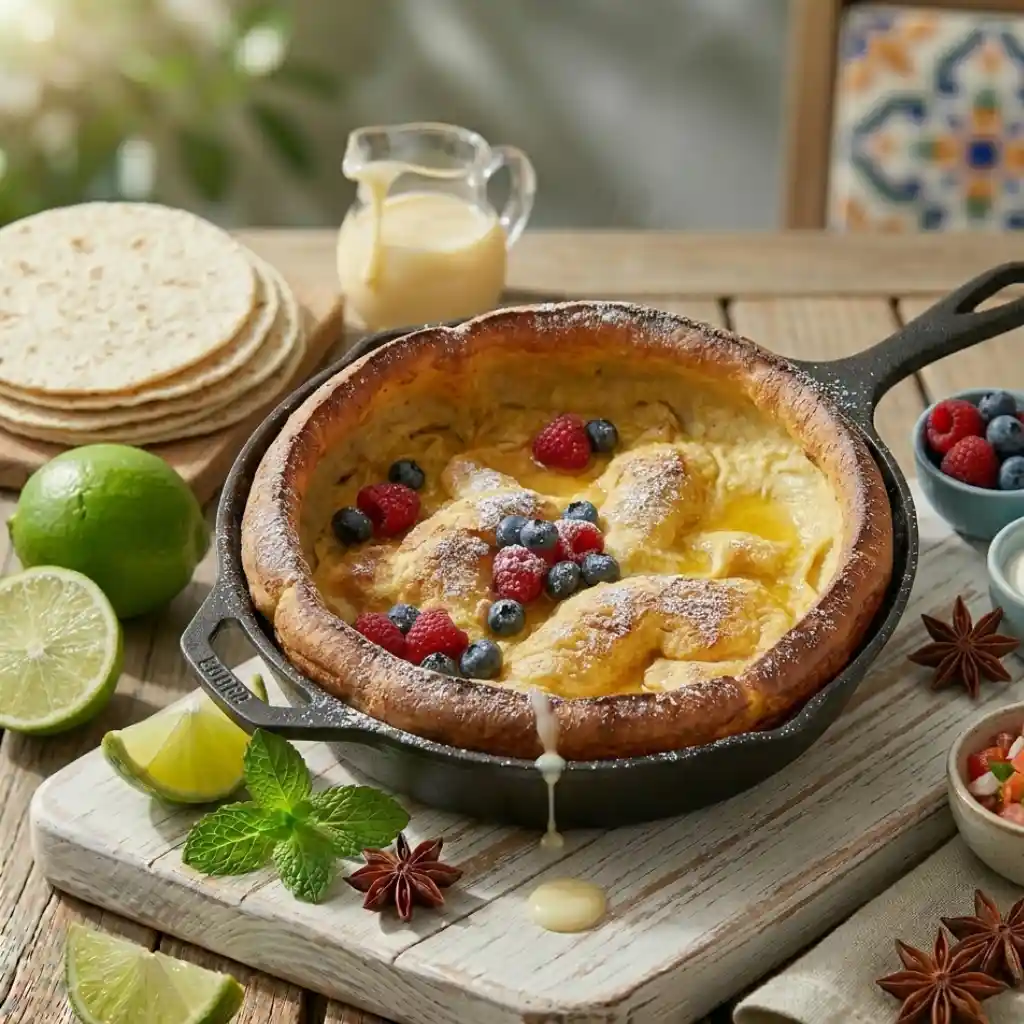
- A dusting of powdered sugar is classic and beautiful.
- Fresh berries (strawberries, blueberries, raspberries) and a drizzle of maple syrup or honey.
- A dollop of whipped cream or a scoop of vanilla ice cream.
- Lemon curd with a sprinkle of zest for a bright, tangy kick.
- Warm apple slices sautéed with cinnamon.
- A swirl of chocolate sauce or hazelnut spread.
Savory Surprises:
- A fried or poached egg on top, perhaps with some crispy bacon or sausage.
- Sautéed mushrooms and spinach with a sprinkle of Parmesan cheese.
- Roasted cherry tomatoes and fresh basil.
- Smoked salmon and cream cheese for a breakfast bagel twist.
Don’t be shy; experiment and find your perfect combination!
Troubleshooting Common Sourdough Dutch Baby Issues
Even seasoned cooks can encounter a hiccup now and then. Here are some common issues you might face with your Sourdough Dutch Baby and how to fix them.
- Why didn’t my Sourdough Dutch Baby puff up? This is the most common concern. The main culprits are usually not preheating the oven and skillet enough, using cold ingredients, or opening the oven door too soon. Ensure your oven is at 425°F and the skillet is in there for at least 15-20 minutes before adding batter. Use room temperature eggs and milk. Resist the urge to peek during the first 10-12 minutes of baking!
- A gummy center: A gummy center usually indicates the Dutch baby didn’t cook long enough, especially if it was very thick. Ensure your oven temperature is accurate and give it a few extra minutes next time. You can also try making the batter slightly thinner.
- Uneven cooking: If one side is crispier or browner than the other, your oven might have hot spots. Rotate the pan halfway through baking next time (but quickly!). Using a heavy cast iron skillet usually helps with even heat distribution.
- A tough or dense texture: This can happen if the batter is overmixed, developing too much gluten, or if it bakes for too long at too low a temperature. Blend just until smooth, and ensure your oven is hot enough for a quick, dramatic puff rather than a slow bake.
Remember, practice makes perfect, and every attempt is a delicious journey!
Storing and Reheating Your Sourdough Dutch Baby
While a Sourdough Dutch Baby is best enjoyed fresh from the oven, sometimes you have leftovers (lucky you!). Proper storage ensures you can enjoy it again.
Allow any leftover Dutch baby to cool completely before storing. Wrap it tightly in plastic wrap or aluminum foil, or place it in an airtight container. It will keep in the refrigerator for up to 2-3 days. The glorious puff will deflate upon cooling, but the flavor remains.
To reheat, place individual slices or the whole Dutch baby on a baking sheet. Warm it in a preheated oven at 350°F (175°C) for about 5-10 minutes, or until heated through. You can also quickly reheat smaller pieces in a toaster oven. Avoid the microwave, as it can make it rubbery.
Frequently Asked Questions
- Why didn’t my Sourdough Dutch Baby puff up? As mentioned in troubleshooting, common reasons include a not-hot-enough pan, cold ingredients, or opening the oven door too early, which lets the steam escape and causes deflation.
- Can I make Sourdough Dutch Baby Pancakes in a muffin tin? Yes, you can! This creates individual mini Dutch babies. Just reduce the baking time to about 10-15 minutes and keep a close eye on them. They make adorable servings.
- Do you have to bake this recipe in Cast Iron Pans? While a cast iron pan is ideal for the best puff and crispiness, you can use other oven-safe baking dishes. Refer to our “Choosing the Best Pan” section for more details on alternatives.
- What is the best way to serve a Sourdough Dutch Baby? Serve it immediately! The moment it comes out of the oven, its dramatic puff begins to deflate, so have your toppings ready to go.
Sourdough Dutch Baby Nutritional Information
This nutritional information is an estimate per serving for one slice of a 12-inch Sourdough Dutch Baby, divided into 8 servings, without toppings. Please remember that these values can vary based on specific ingredients and brands used.
| Nutrient | Amount (Approx.) |
|---|---|
| Calories | 250 kcal |
| Total Fat | 15 g |
| Saturated Fat | 8 g |
| Cholesterol | 180 mg |
| Sodium | 120 mg |
| Total Carbs | 22 g |
| Dietary Fiber | 1 g |
| Total Sugars | 6 g |
| Protein | 8 g |
Disclaimer: Nutritional information is an estimate based on average ingredient values and may vary based on specific brands, preparation methods, and serving sizes.
Conclusion
There you have it, friends! The Sourdough Dutch Baby is more than just a pancake; it’s an experience, a little bit of kitchen magic that brings a smile to everyone’s face. I absolutely adore how simple it is to prepare, yet it always feels so special and celebratory. Using your sourdough discard in such a delicious way is truly a win-win! You can follow us on Pinterest.