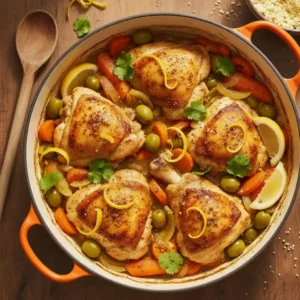
A Taste of Sunshine: Delicious Moroccan Chicken (15-18 uses)
Hello, friends! ready to whisk you away on a culinary adventure right from your own kitchen. Today, we’re diving into a dish that’s bursting with sunshine and fragrant spices: a truly delightful Moroccan chicken. Imagine tender, fall-off-the-bone chicken bathed in a rich, aromatic sauce, all coming together in about an hour. Get ready to create some kitchen magic!
Why This Moroccan Chicken Recipe Is a Must-Try
- Weeknight Wonder: Despite its exotic flavors, this dish comes together faster than you might think, making it perfect for those busy evenings when dinner needs to be both delicious and quick.
- Authentic Flavors, Simple Steps: You don’t need a special tagine pot or a pantry full of obscure ingredients to capture the soul of Moroccan cuisine. This recipe delivers incredible depth of flavor with straightforward techniques.
- Perfectly Tender Chicken: We’re using bone-in, skin-on thighs, and a clever cooking method to ensure every bite of chicken is incredibly moist and succulent. It’s truly a game-changer for tender Moroccan chicken.
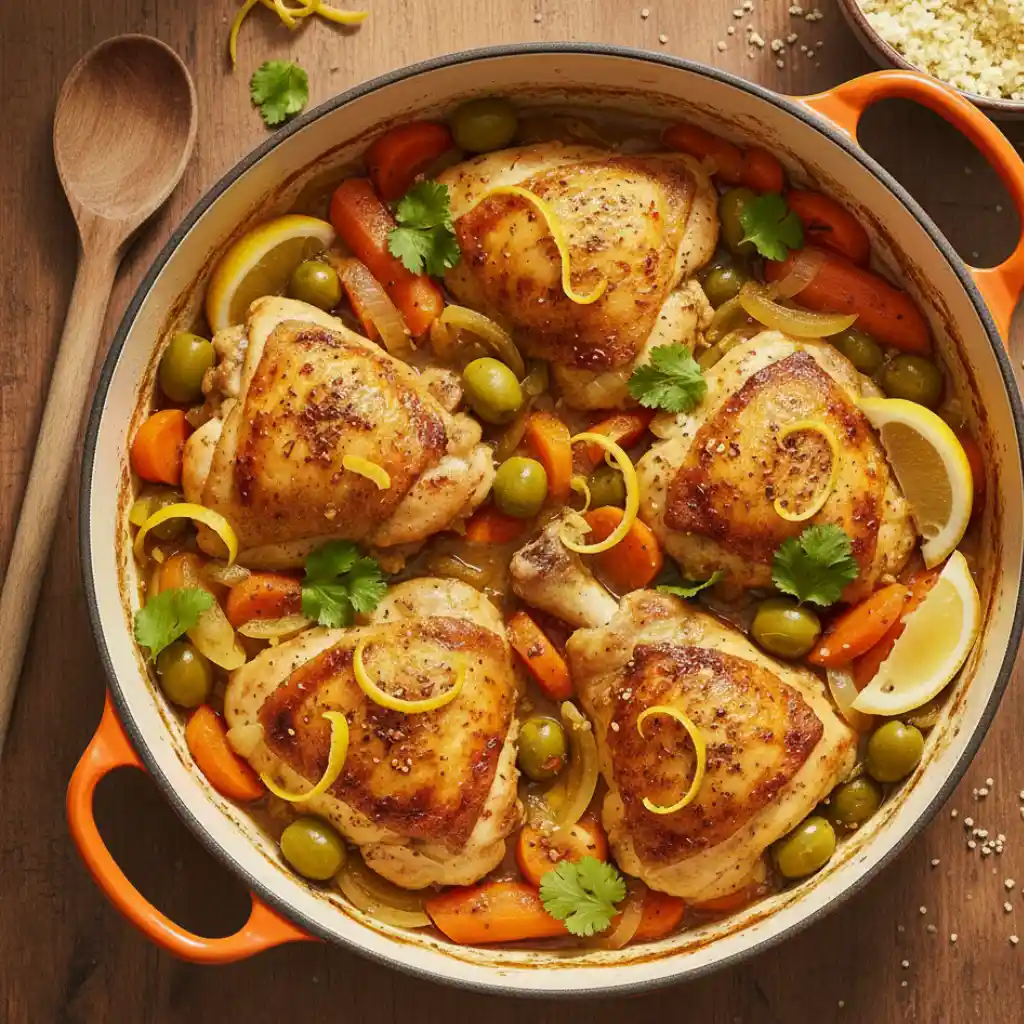
Moroccan Chicken with Preserved Lemon Magic
Ingredients
Equipment
Method
- Combine the spices in a small bowl and set aside. Zest the lemon. Combine 1 teaspoon of the lemon zest with 1 minced garlic clove; set aside.
- Season both sides of chicken pieces with 2 teaspoons salt and ½ teaspoon pepper. Heat the olive oil in a large, heavy-bottomed Dutch oven or pan over medium-high heat until beginning to smoke. Brown the chicken pieces skin side down in a single layer until deep golden, about 5 minutes. Using tongs, flip the chicken pieces over and brown the other side, about 4 minutes more. Transfer the chicken to a large plate. When cool enough to handle, peel off the skin and discard. Pour off and discard all but 1 tablespoon of fat from the pan.
- Reduce the heat to medium. Add the onion and cook, stirring occasionally, until they have browned at the edges but still retain their shape, 5 to 7 minutes (add a few tablespoons of water now and then if the pan gets too dark). Add the remaining minced garlic and cook, stirring, until fragrant, about 30 seconds. Add the spices and flour and cook, stirring constantly, until fragrant, about 30 seconds. Stir in the chicken broth, honey, remaining lemon zest, and ¼ teaspoon salt, scraping the bottom of the pan with a wooden spoon to loosen any browned bits. Add the chicken (with any accumulated juices) back into the pan. Reduce the heat to medium-low, cover, and simmer for 10 minutes.
- Add the carrots, cover, and simmer until the chicken is cooked through and the carrots are tender-crisp, about 10 minutes more.
- Stir in the olives, reserved lemon zest-garlic mixture, cilantro, and 1 tablespoon of the lemon juice. Taste the sauce and adjust seasoning with salt, pepper, and more lemon juice, if desired. Serve warm.
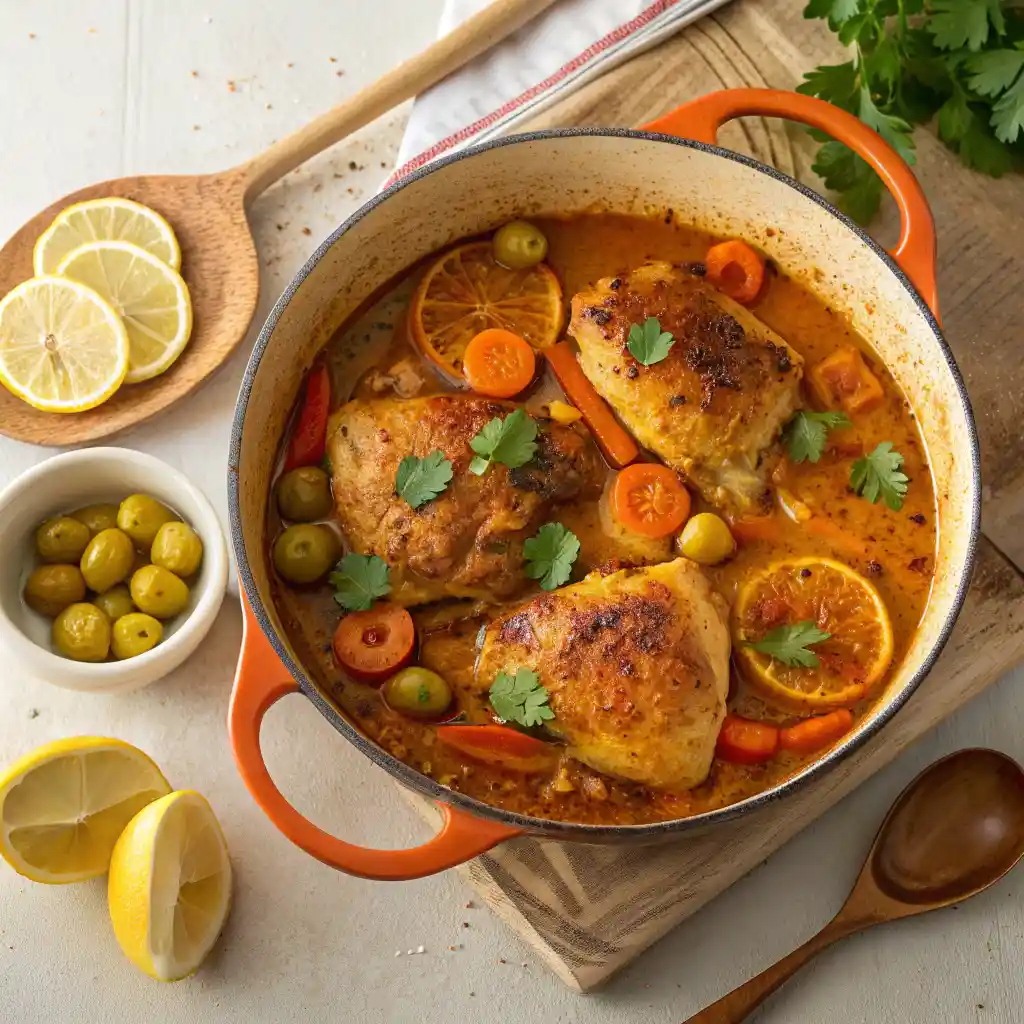
Choosing Your Chicken: A Guide for the Best Moroccan Chicken
When it comes to making a truly spectacular Moroccan chicken, the cut of chicken you choose can make all the difference. While the recipe calls for bone-in, skin-on chicken thighs, let’s chat about why and what other options you have.
- Bone-In, Skin-On Thighs (The Star): These are my absolute favorite for this dish. The bones add flavor to the sauce as it simmers, and the skin, when browned well, contributes richness and helps keep the meat incredibly moist. We remove the skin partway through cooking, so you get that flavor without greasiness.
- Chicken Drumsticks: These are also a fantastic choice, offering a similar flavor and tenderness to thighs. They’ll cook in roughly the same amount of time.
- Boneless, Skinless Thighs: These are convenient and will work, but they can sometimes dry out a bit more easily during cooking as they lack the bone and skin for protection. You might need to shorten the cooking time slightly to prevent them from becoming tough.
- Chicken Breasts: While you can use chicken breasts, I generally don’t recommend them for this particular recipe. They cook much faster and can become dry and stringy if not handled perfectly, which is harder to achieve in a stew-like dish. If you must use them, add them much later in the cooking process and cook only until just done.
For the most satisfying and succulent Moroccan chicken, I highly recommend sticking with the bone-in, skin-on thighs. They offer the best balance of flavor, moisture, and tenderness.
Tagine vs. Dutch Oven: Your Moroccan Chicken Cooking Vessel
When using a Dutch oven for this Moroccan chicken:
- Sear Well: Make sure to get a good, deep brown on the chicken pieces before adding liquids. This builds foundational flavor.
- Don’t Crowd the Pot: Brown the chicken in batches if necessary to ensure proper searing rather than steaming.
- Tight Lid: Keep that lid on during the simmering stages to trap all that delicious steam and aroma.
- Stirring: Give it an occasional stir, especially after adding the flour and broth, to prevent sticking and ensure even cooking.
Your Dutch oven will create a wonderfully rich and flavorful Moroccan chicken, bringing those authentic tastes right to your table.
Recipe Ingredients
Here’s everything you’ll need to create this flavorful Moroccan chicken:
- 1 teaspoon paprika
- 1 teaspoon ground cumin
- ¼ teaspoon cayenne pepper
- ½ teaspoon ground ginger
- ½ teaspoon ground coriander
- ¼ teaspoon ground cinnamon
- 1 lemon
- 5 cloves garlic, minced
- 8 bone-in, skin-on chicken thighs (about 4 pounds), trimmed of excess skin and fat (see note)
- Salt and ground black pepper
- 1 tablespoon olive oil
- 1 large yellow onion, halved and cut into ¼-in-thick slices
- 2 tablespoons all-purpose flour
- 1¾ cups chicken broth
- 2 tablespoons honey
- 2 large or 3 medium carrots, peeled and cut crosswise into ½-inch-thick coins
- ½ cup Greek cracked green olives, pitted and halved (see note)
- 2 tablespoons chopped fresh cilantro leaves
Step-by-Step Moroccan Chicken Perfection
Let’s get cooking! Here’s how we’ll bring this wonderful Moroccan chicken to life, step by step.
- Combine the spices in a small bowl and set aside. Zest the lemon. Combine 1 teaspoon of the lemon zest with 1 minced garlic clove; set aside.
- Season both sides of chicken pieces with 2 teaspoons salt and ½ teaspoon pepper. Heat the olive oil in a large, heavy-bottomed Dutch oven or pan over medium-high heat until beginning to smoke. Brown the chicken pieces skin side down in a single layer until deep golden, about 5 minutes. Using tongs, flip the chicken pieces over and brown the other side, about 4 minutes more. Transfer the chicken to a large plate. When cool enough to handle, peel off the skin and discard. Pour off and discard all but 1 tablespoon of fat from the pan.
- Reduce the heat to medium. Add the onion and cook, stirring occasionally, until they have browned at the edges but still retain their shape, 5 to 7 minutes (add a few tablespoons of water now and then if the pan gets too dark). Add the remaining minced garlic and cook, stirring, until fragrant, about 30 seconds. Add the spices and flour and cook, stirring constantly, until fragrant, about 30 seconds. Stir in the chicken broth, honey, remaining lemon zest, and ¼ teaspoon salt, scraping the bottom of the pan with a wooden spoon to loosen any browned bits. Add the chicken (with any accumulated juices) back into the pan. Reduce the heat to medium-low, cover, and simmer for 10 minutes.
- Add the carrots, cover, and simmer until the chicken is cooked through and the carrots are tender-crisp, about 10 minutes more.
- Stir in the olives, reserved lemon zest-garlic mixture, cilantro, and 1 tablespoon of the lemon juice. Taste the sauce and adjust seasoning with salt, pepper, and more lemon juice, if desired. Serve warm.
Note: Don’t fret too much over trimming the chicken thighs. The skin gets removed midway through the cooking process, and most of the fat will cook off and get drained. I usually just take kitchen shears and quickly snip off any excess skin or fat. Cracked green olives are olives that have been ‘cracked’ or split open before curing, allowing the brine or marinade to penetrate. You can find them in your supermarket’s olive bar, or substitute any green olive that you like.
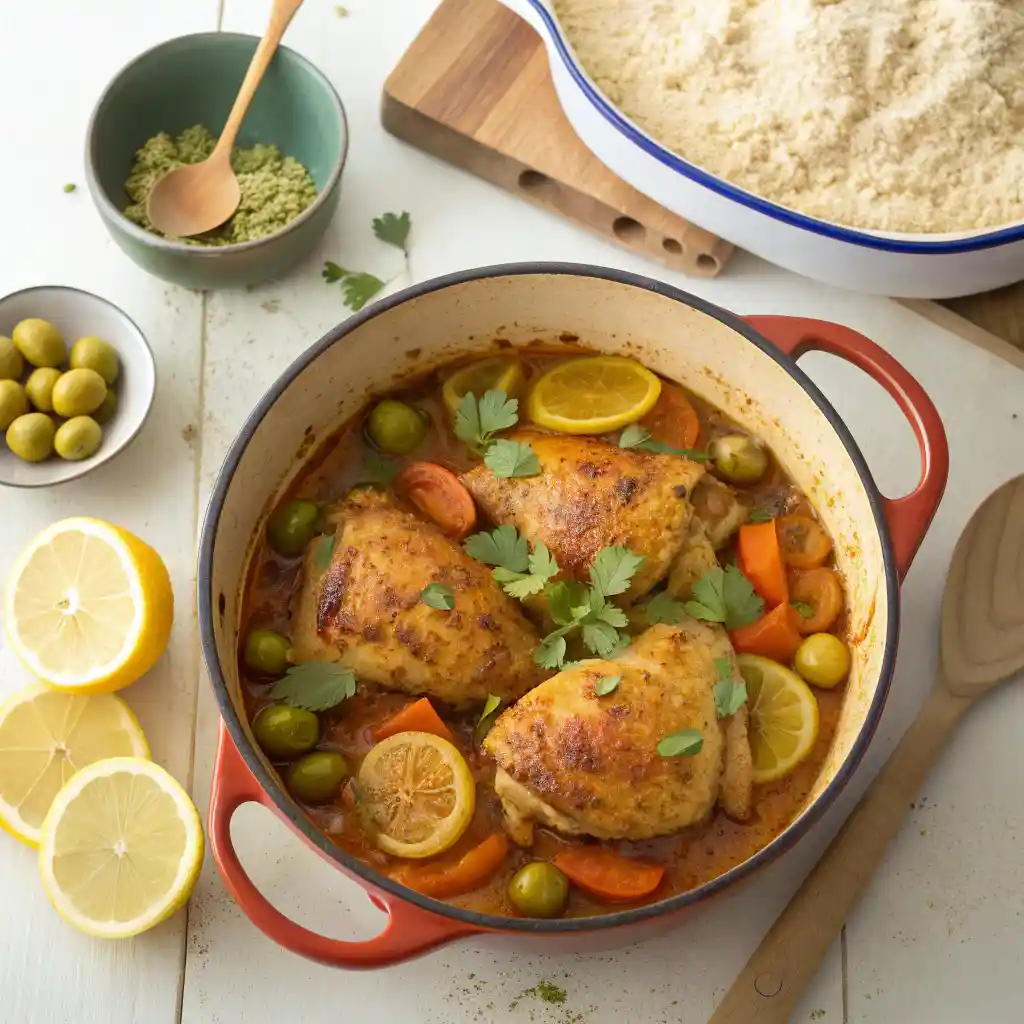
Mastering Your Moroccan Chicken: Tips, Tricks, and Troubleshooting
Cooking should be joyful, not stressful! So, let’s tackle any little bumps you might encounter on your Moroccan chicken journey with a smile.
- Sauce Too Thin? Don’t worry! If your sauce seems a bit too watery after the chicken and carrots are cooked, simply remove the chicken and vegetables, then bring the sauce to a simmer over medium heat. Let it bubble away uncovered for a few minutes until it thickens to your liking. You can also make a slurry by mixing 1 tablespoon of cornstarch with 2 tablespoons of cold water, then whisking it into the simmering sauce until thickened.
- Sauce Too Thick? Easy fix! Just stir in a little more chicken broth or water, a tablespoon at a time, until you reach your desired consistency.
- Chicken Not Tender Enough? This usually happens if the heat was too high during simmering. Ensure you’re simmering gently over medium-low heat, with just a few lazy bubbles. The lid should be on tight to trap moisture. If it’s already cooked through but not quite tender, just cover and continue to simmer gently for another 10-15 minutes.
- Spice Level Just Right? Taste and adjust! The recipe provides a guideline, but your preference is key. If you like it spicier, add a pinch more cayenne. If you prefer it milder, omit it entirely. The lemon juice at the end is also your friend for brightening flavors.
Think of these as friendly nudges to help your Moroccan chicken turn out perfectly every time.
Sweet Endings and Savory Sides: Serving Your Moroccan Chicken
The most traditional and wonderful way to serve this fragrant Moroccan chicken is over a fluffy bed of couscous. Its light texture is perfect for soaking up every drop of that delicious, spiced sauce. Simply prepare your couscous according to package directions while the chicken simmers. For a refreshing dessert after this warmly spiced meal, consider a light palate cleanser like homemade Disney Dole Whip, lean into the citrus theme with lemon blueberry cupcakes with frosting, or go all-in on indulgence with a decadent chocolate lava cake.
But don’t feel limited! We can get creative with our serving options:
- Other Grains: Brown rice or quinoa make excellent, slightly heartier alternatives to couscous. They offer a wonderful nutty flavor and chewy texture.
- Low-Carb Love: For a lighter, low-carb option, try serving your Moroccan chicken over cauliflower rice. It’s a fantastic way to get your veggies in! Zucchini noodles (zoodles) are another delightful, quick-cooking choice.
- Vibrant Salads: A simple side salad with fresh greens, cucumber, and a light lemon-herb vinaigrette can provide a refreshing contrast to the rich stew.
- Crusty Bread: And of course, you can never go wrong with some warm, crusty bread for dipping into that incredible sauce!
No matter how you serve it, this Moroccan chicken is guaranteed to be a hit.
Make-Ahead Magic and Freezing for Later
- Make-Ahead: You can absolutely prepare this dish a day or two in advance. Follow the recipe all the way through the step where you add the carrots. Once the carrots are tender-crisp, let the dish cool completely, then transfer it to an airtight container and refrigerate for up to 2 days. To reheat, gently warm it on the stovetop over low heat, stirring occasionally, until the chicken is heated through. Then, proceed with adding the olives, cilantro, and lemon juice.
- Freezing: This Moroccan chicken also freezes beautifully! Prepare the dish completely, let it cool, and then portion it into freezer-safe containers or bags. It should keep well in the freezer for up to 2-3 months. Thaw overnight in the refrigerator before reheating gently on the stovetop or in the microwave. The sauce might separate slightly upon thawing, but a good stir will bring it all back together.
Having this Moroccan chicken ready to go means a comforting, flavorful meal is always within reach!
A Taste of Culture: The Story Behind Moroccan Chicken
The allure of Moroccan chicken goes far beyond its incredible taste; it’s a dish steeped in rich history and cultural tradition. Originating from North Africa, specifically Morocco, these aromatic, slow-cooked stews are often prepared in the iconic tagine pot. Tagines are not just cookware; they are central to Moroccan hospitality and communal dining.
The blend of spices like cumin, ginger, cinnamon, and turmeric, combined with ingredients like preserved lemons and olives, reflects Morocco’s historical position as a crossroads of cultures and trade routes. This dish is a beautiful representation of how food can tell a story, connecting us to generations past and sharing the warmth of Moroccan homes. Making this Moroccan chicken is like inviting a piece of that vibrant culture into your own kitchen.
Frequently Asked Questions
- Can I make this dish spicier? Absolutely! For more heat, simply add a pinch or two more of cayenne pepper. You can also add a finely minced fresh chili pepper along with the garlic.
- What if I can’t find cracked green olives? No problem! Any good quality pitted green olive will work beautifully. Castelvetrano or Manzanilla olives are great substitutes.
- Is it okay to use boneless, skinless chicken? Yes, but keep an eye on the cooking time. Boneless, skinless thighs cook faster and might become dry if overcooked, so add them later in the process or reduce the simmering time.
- How do I store leftovers? Leftover Moroccan chicken can be stored in an airtight container in the refrigerator for up to 3 days. Reheat gently on the stovetop or in the microwave.
Conclusion
And there you have it, my friends – a journey into the heart of Morocco with this incredibly flavorful and surprisingly simple Moroccan chicken. It’s a dish that proves you don’t need hours in the kitchen or fancy ingredients to create something truly special. From the warm embrace of the spices to the tender chicken and vibrant sauce, I hope this recipe brings a little bit of sunshine and joy to your table.