Amazing Dutch Oven Bread Recipe: Bakery-Quality Crust at Home!
This Dutch Oven Bread recipe is a total game-changer that turns simple ingredients into a bakery-quality loaf with minimal effort. It’s surprisingly easy, requires almost no active time, and yields gorgeous, professional-looking results that are sure to impress.
Why You’ll Love This Easy Dutch Oven Bread Recipe
I know you’re going to fall head over heels for this dutch oven bread recipe. It’s a true kitchen game-changer for so many reasons:
- Incredibly Simple: Seriously, this recipe is practically foolproof. You just mix, let it rise, and bake. No fancy techniques required!
- Minimal Cleanup: With just one bowl for mixing and your trusty Dutch oven, the cleanup is a breeze. More time for enjoying your creation!
- Bakery-Quality Results: That perfectly crisp crust and airy, tender interior? You’ll get it every single time, right from your own oven.
- Perfect for Beginners: If you’ve ever felt intimidated by bread making, this recipe is your perfect starting point. I’ll guide you every step of the way!
The Magic of No-Knead Bread: A Brief History
Popularized by baker Jim Lahey in 2007, the no-knead method simplifies bread-making by mimicking old-world techniques. Instead of manual labor, it relies on long, slow fermentation to develop flavor and structure, proving that great bread doesn’t have to be complicated or time-consuming.
What Makes This Dutch Oven Bread Recipe So Special?
The secret to this bread lies in the preheated Dutch oven. The heavy lid traps moisture released from the dough, creating a steamy environment that allows the loaf to fully expand before the crust sets. Removing the lid halfway through releases the steam, letting the crust turn golden and crackly, while minimal handling ensures an airy, open crumb.
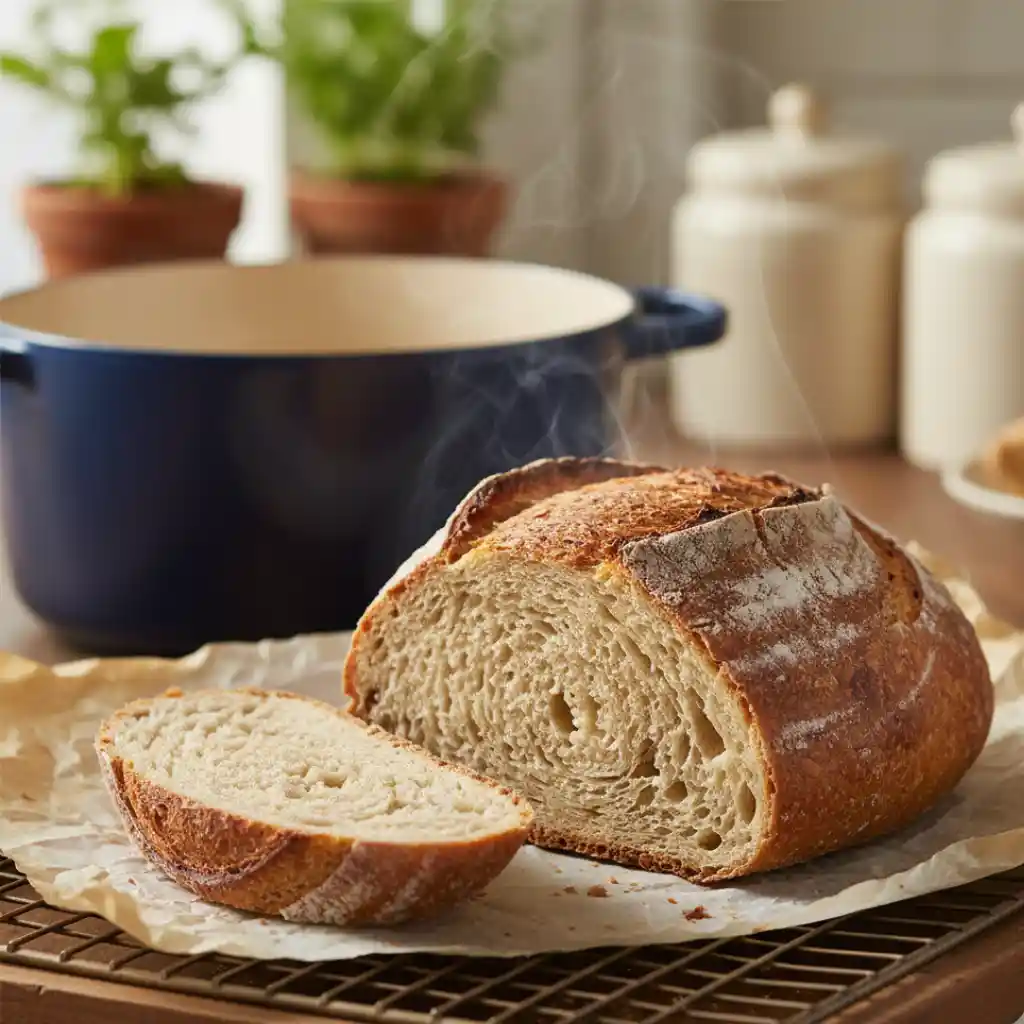
Amazing Dutch Oven Bread Recipe: Bakery Quality
Ingredients
Equipment
Method
- In a large bowl, I like to combine the warm water, yeast, and salt. Give it a good whisk until the yeast and salt are mostly dissolved. This gets everything ready to mingle with the flour.
- Now, pour in all the all-purpose flour at once. Stir everything together until you have a shaggy, sticky dough. Don’t fuss too much about it looking perfect; the goal is just to make sure all the flour is hydrated. It will be sticky, and that’s exactly what we want! Scrape down your spoon with a spatula to get every last bit. If it seems a tad too wet or too dry, don’t fret! A tablespoon of flour or water at a time will fix it right up.
- Cover the bowl with a clean kitchen towel or put the lid on your container slightly ajar. Now, let this sticky dough hang out in a somewhat warm place for 2 to 3 hours, or until it has doubled in size. If your house is a bit chilly, here’s my cozy trick: pop your oven on for just a few minutes, then turn it off. Place the covered bowl inside. The residual warmth creates a perfect little bread-proofing haven!
- When your dough has puffed up beautifully after its rise, it’s time for some gentle handling. The key to this dutch oven bread recipe is to keep it light and airy, so we avoid overworking it.Gently scrape the dough onto a piece of parchment paper that you’ve lightly dusted with flour. Use your silicone spatula and your hands to coax it into a rough loaf shape – maybe a bit oval or round, depending on your Dutch oven. Don’t worry about making it perfectly smooth or symmetrical; rustic charm is part of its appeal! Fold any wild edges up and over to create a bit of tension on the surface.
- You’ve already given your dough its first beautiful rise, and now it’s ready for that transformation. As mentioned in the instructions, this rise typically takes between 2 to 3 hours. You’re looking for the dough to become visibly larger, almost doubling in volume. It should look bubbly and alive.If your kitchen tends to be on the cooler side, don’t despair! My favorite trick for ensuring a good rise, even on a chilly day, is to create a warm environment. Simply preheat your oven for just a couple of minutes until it’s slightly warm, then turn it off completely. Place your covered bowl of dough inside this cozy, turned-off oven. The trapped heat will give your yeast the perfect conditions to work their magic without over-proofing. It’s a simple step that makes a big difference!
- This step is non-negotiable for achieving that incredible crust on our dutch oven bread recipe! About 30 minutes to an hour before you plan to bake, it’s time to get that Dutch oven screaming hot.Preheat your oven to 450°F (230°C). Place your empty Dutch oven, with its lid ON, into the oven while it preheats. Let it heat up for a solid 20 minutes after the oven reaches temperature. This ensures that pot is incredibly hot, ready to give your bread that initial burst of intense heat it needs. Safety first here – that pot will be extremely hot when you take it out, so use sturdy oven mitts!
- Once your dough has had its lovely rise and your Dutch oven is toasty hot, it’s time to bring them together. Gently turn your risen dough out onto a piece of parchment paper that’s been lightly dusted with flour. You can nudge it into a more cohesive shape—an oval or round works well, depending on your pot. Don’t stress about perfection; this bread is famously forgiving and beautiful in its rustic form.For an optional touch, you can use a very sharp knife or a razor blade to score the top of the loaf. A few shallow slashes, maybe in a cross pattern or criss-cross design, allow the bread to expand beautifully in the oven. It also just looks so professional!
- Now for the grand finale of our dutch oven bread recipe! Carefully remove the blazing hot Dutch oven from the oven (lid on!). Take off the lid – watch out for that steam! Using the edges of the parchment paper as handles, carefully lower your shaped dough into the hot pot.Place the lid back on the Dutch oven and gently return it to the hot oven. Bake for 35 minutes with the lid on. If your dough came straight from the fridge, you might need an extra 5 minutes here. After 35 minutes, carefully remove the lid. Continue baking for another 5 to 10 minutes, or until the crust is a beautiful, deep golden brown. If it needs a little more color, just keep an eye on it!
- The aroma filling your kitchen right now is pure heaven, isn’t it? But here comes the toughest part of making this dutch oven bread recipe: waiting for it to cool! Carefully lift the bread out of the Dutch oven using the parchment paper and place it on a wire rack or a cutting board.It’s so tempting to slice into it immediately, but please resist! Letting the bread cool for at least 10 minutes, and ideally 30 minutes to an hour, allows the internal structure to set. If you cut it too soon, you’ll likely end up with a gummy interior. Patience truly is a baker’s virtue, and it will be rewarded with the perfect texture.
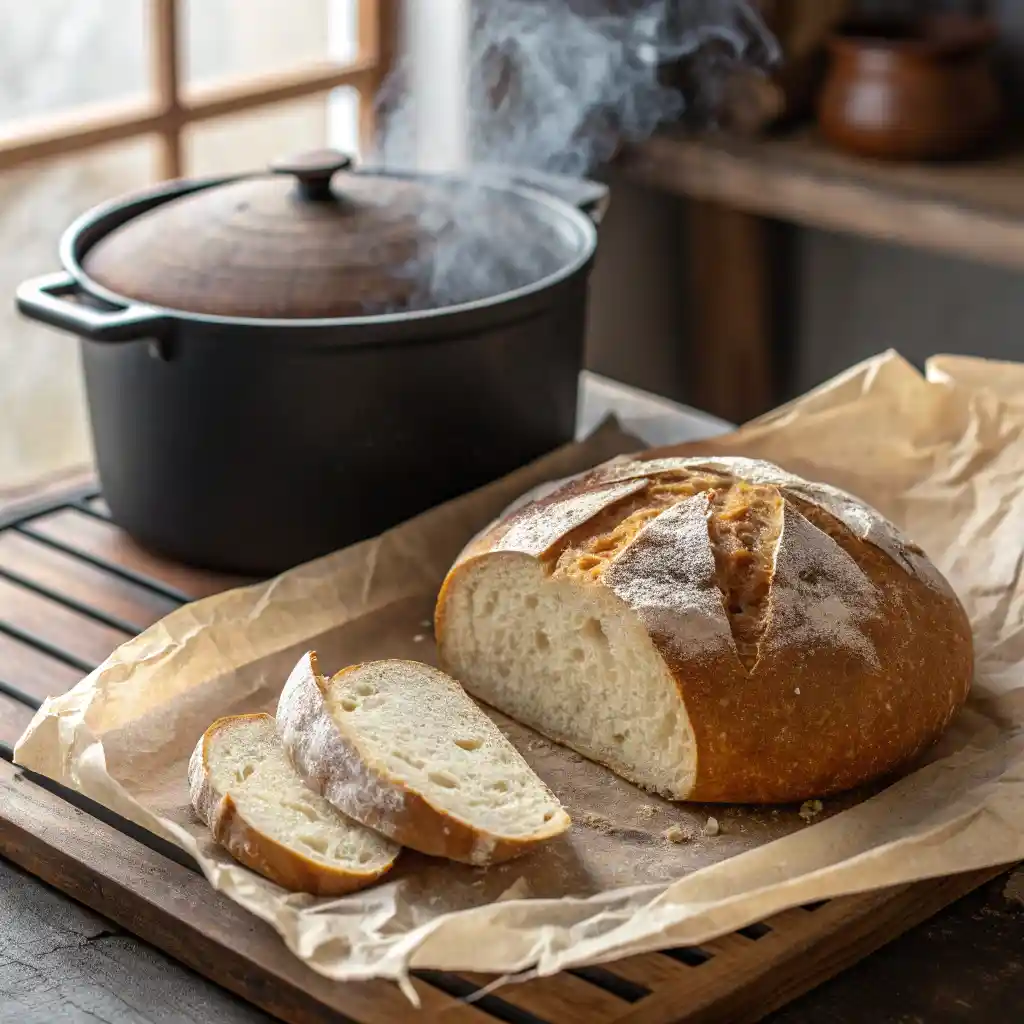
What You’ll Need for Your Dutch Oven Bread Recipe
Beyond your star player, the Dutch oven, here are a few other trusty kitchen companions you’ll want for this dutch oven bread recipe:
- Large Mixing Bowl
- Measuring Cups and Spoons
- Kitchen Towel or Lid
- Parchment Paper
- Silicone Spatula
- Very Sharp Knife or Clean Razor Blade (Optional)
The Simple Ingredients for the Best Dutch Oven Bread
Gather your simple ingredients, and let’s get ready to create some magic with this dutch oven bread recipe! I love that this recipe uses just a few pantry staples.
- Warm Water: 1 1/2 cups (about 100°F)
- Yeast: 1 packet (active dry, instant, or quick rise — 2.25 teaspoons)
- Fine Grain Salt: 1 ½ teaspoons
- All-Purpose Flour: 3 1/4 cups
If you’re looking for more ways to incorporate corn, explore Amazing Chicken Tortellini Soup
Step-by-Step: Crafting Your Perfect Dutch Oven Bread
Alright, let’s get our hands (a little) messy and create this amazing dutch oven bread recipe! I’ll walk you through each step with plenty of encouragement.
Mixing the Dough
In a large bowl, I like to combine the warm water, yeast, and salt. Give it a good whisk until the yeast and salt are mostly dissolved. This gets everything ready to mingle with the flour.
Adding the Flour
Now, pour in all the all-purpose flour at once. Stir everything together with a sturdy spoon or spatula until you have a shaggy, sticky dough. Don’t fuss too much about it looking perfect; the goal is just to make sure all the flour is hydrated. It will be sticky, and that’s exactly what we want! Scrape down your spoon with a spatula to get every last bit. (Imagine a photo here showing a wet, shaggy dough). If it seems a tad too wet or too dry, don’t fret! A tablespoon of flour or water at a time will fix it right up.
The Long Rise
Cover the bowl with a clean kitchen towel or put the lid on your container slightly ajar. Now, let this sticky dough hang out in a somewhat warm place for 2 to 3 hours, or until it has doubled in size. (Imagine another photo here of the risen dough). If your house is a bit chilly, here’s my cozy trick: pop your oven on for just a few minutes, then turn it off. Place the covered bowl inside. The residual warmth creates a perfect little bread-proofing haven!
Dough Handling: The “Less is More” Approach
When your dough has puffed up beautifully after its rise, it’s time for some gentle handling. The key to this dutch oven bread recipe is to keep it light and airy, so we avoid overworking it.
Gently scrape the dough onto a piece of parchment paper that you’ve lightly dusted with flour. Use your silicone spatula and your hands to coax it into a rough loaf shape – maybe a bit oval or round, depending on your Dutch oven. Don’t worry about making it perfectly smooth or symmetrical; rustic charm is part of its appeal! Fold any wild edges up and over to create a bit of tension on the surface.
Rising to the Occasion: Letting Your Dough Proof
The second rise typically takes 2 to 3 hours. Look for the dough to nearly double in volume and appear bubbly. If your kitchen is cool, create a cozy environment by placing the covered bowl in an oven that was briefly warmed and then turned off.
The Crucial Preheat: Getting Your Dutch Oven Ready
This step is non-negotiable for achieving that incredible crust on our dutch oven bread recipe! About 30 minutes to an hour before you plan to bake, it’s time to get that Dutch oven screaming hot.
Preheat your oven to 450°F (230°C). Place your empty Dutch oven, with its lid ON, into the oven while it preheats. Let it heat up for a solid 20 minutes after the oven reaches temperature. This ensures that pot is incredibly hot, ready to give your bread that initial burst of intense heat it needs. Safety first here – that pot will be extremely hot when you take it out, so use sturdy oven mitts! The Dutch oven offers ample thermal mass to ensure a temperature-stable baking environment with its thick cast iron walls.
Shaping and Scoring Your Loaf
Once your dough has had its lovely rise and your Dutch oven is toasty hot, it’s time to bring them together. Gently turn your risen dough out onto a piece of parchment paper that’s been lightly dusted with flour. You can nudge it into a more cohesive shape—an oval or round works well, depending on your pot. Don’t stress about perfection; this bread is famously forgiving and beautiful in its rustic form.
For an optional touch, you can use a very sharp knife or a razor blade to score the top of the loaf. A few shallow slashes, maybe in a cross pattern or criss-cross design, allow the bread to expand beautifully in the oven. It also just looks so professional!
Baking Your Masterpiece: The Lid On, Lid Off Method
Now for the grand finale of our dutch oven bread recipe! Carefully remove the blazing hot Dutch oven from the oven (lid on!). Take off the lid – watch out for that steam! Using the edges of the parchment paper as handles, carefully lower your shaped dough into the hot pot.
Place the lid back on the Dutch oven and gently return it to the hot oven. Bake for 35 minutes with the lid on. If your dough came straight from the fridge, you might need an extra 5 minutes here. After 35 minutes, carefully remove the lid. Continue baking for another 5 to 10 minutes, or until the crust is a beautiful, deep golden brown. If it needs a little more color, just keep an eye on it!
Cooling and Patience: The Hardest Part!
The aroma filling your kitchen right now is pure heaven, isn’t it? But here comes the toughest part of making this dutch oven bread recipe: waiting for it to cool! Carefully lift the bread out of the Dutch oven using the parchment paper and place it on a wire rack or a cutting board.
It’s so tempting to slice into it immediately, but please resist! Letting the bread cool for at least 10 minutes, and ideally 30 minutes to an hour, allows the internal structure to set. If you cut it too soon, you’ll likely end up with a gummy interior. Patience truly is a baker’s virtue, and it will be rewarded with the perfect texture.
Troubleshooting Your Dutch Oven Bread Recipe
Even the best dutch oven bread recipe can sometimes present little hiccups! Here’s how to navigate common issues:
| Problem | Solution |
|---|---|
| Dough sticking to parchment | Ensure the parchment paper is lightly floured, and gently scrape underneath with a spatula before transferring. A bit of sticking is normal. |
| Pale crust | Your oven might run cool, or the dough needed a bit more time. Try the final 5-10 minutes uncovered, or increase oven temp slightly next time. |
| Gummy interior | The bread likely wasn’t cooled long enough. Allow at least 30 minutes for the internal structure to fully set before slicing. |
| Dense loaf | This can happen if the yeast wasn’t active, the dough was handled too much, or the rise time was insufficient. Ensure ingredients are fresh and follow rise times closely. |
| Oven temperature fluctuates | Use an oven thermometer to check your oven’s accuracy. Ensure the door is sealed tightly and avoid opening it unnecessarily during baking. |

Dutch Oven Deep Dive: Enameled vs. Raw Cast Iron
For baking bread, both enameled and raw cast iron work beautifully. Enameled pots are easy to clean and non-reactive, while raw cast iron can produce a slightly deeper crust color but requires seasoning. Ultimately, either choice will trap the steam needed for excellent oven spring and a crisp, shiny crust.
Beyond the Basic Loaf: Creative Variations and Additions
Once you’ve mastered the basic dutch oven bread recipe, feel free to get creative! Stir in a handful of your favorite seeds like sunflower or pumpkin seeds along with the flour for added texture and nutty flavor. A sprinkle of dried herbs like rosemary or thyme can add a lovely savory note. You could even add about 1/2 cup of shredded sharp cheddar cheese to the dough during the last few folds for a cheesy delight!
Storage and Reheating Your Delicious Loaf
To keep your beautiful dutch oven bread recipe loaf fresh, store it at room temperature wrapped in a clean kitchen towel or in a bread box for up to 2-3 days. If you need to store it longer, slice the cooled bread and freeze it in an airtight bag for up to 3 months. To reheat, wrap slices in foil and warm them in a 350°F oven for about 10-15 minutes, or simply toast them to recapture that glorious crispness!
FAQ: Your Dutch Oven Bread Questions Answered
- Can I use a different type of flour? While all-purpose is recommended for its balance, you can experiment with adding some whole wheat or rye flour (up to 1/3 of the total flour) for a different flavor and texture.
- What kind of yeast is best? Active dry, instant, or quick-rise yeast all work well here! Just make sure it’s fresh for optimal results.
- Can I use a pot that isn’t a Dutch oven? Yes, a heavy, oven-safe pot with a tight-fitting lid will work. Cast iron is ideal for heat retention.
- How do I scale this recipe? You can double or triple the recipe, but be sure to use a large enough bowl for the dough to rise properly. You may also need to bake loaves one at a time to ensure proper oven circulation.
Conclusion: Enjoy Your Homemade Dutch Oven Bread!
See? You’ve just created an absolutely stunning dutch oven bread recipe with your own two hands! I hope this journey from simple ingredients to a gorgeous, crusty loaf brings you so much joy and confidence in the kitchen. There’s nothing quite like the smell and taste of freshly baked bread made right at home.
FOLLOW US ON THE PINTEREST