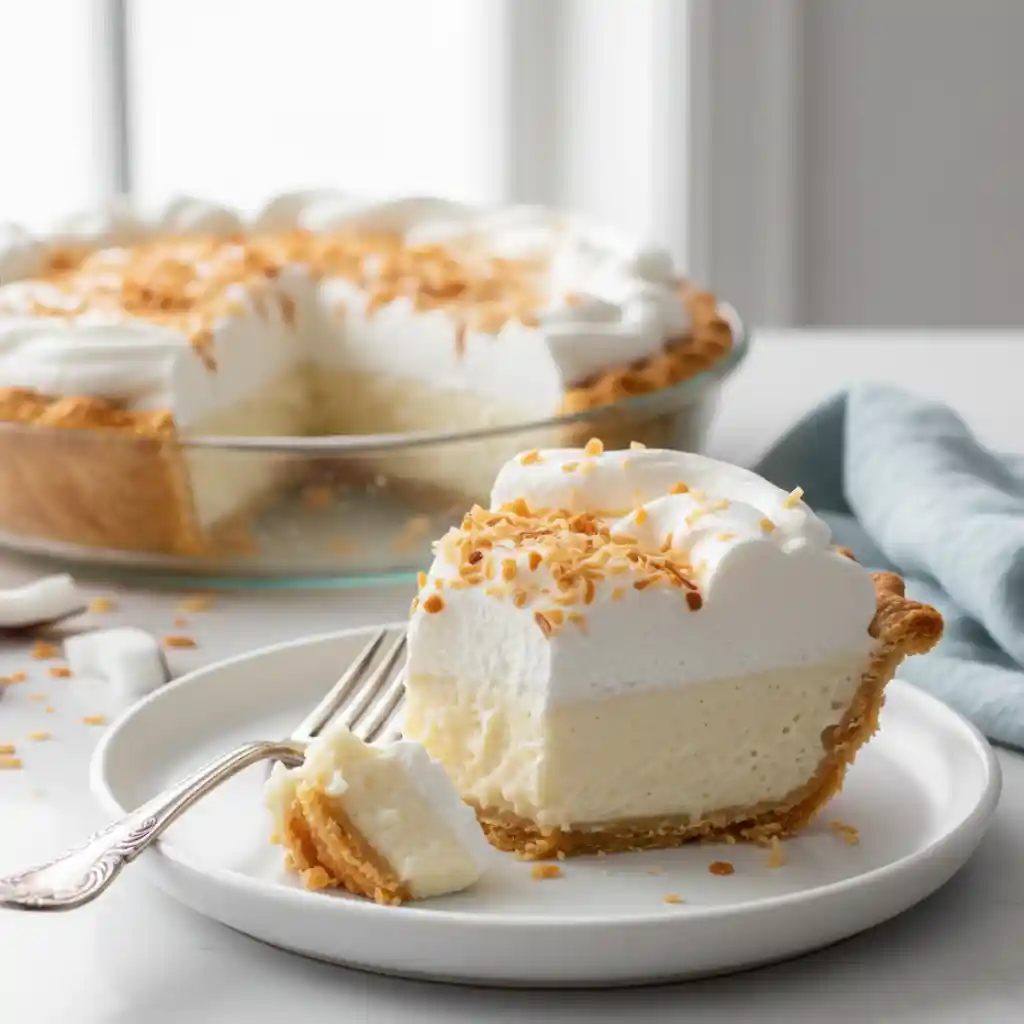
I grew up in a house where a good pie solved almost everything, and this coconut cream pie quickly became my “peace offering” dessert. One bite feels like silk, with toasty coconut, cool whipped cream, and a flaky crust that shatters just a little.
You cook the custard on the stovetop, pile it into a fully baked crust, then crown it with real whipped cream. It tastes bakery fancy, yet you pull it off in an afternoon. I love it for holidays, birthdays, or any random Tuesday that needs a creamy coconut dessert.
Why You’ll Love This Coconut Cream Pie
- Ultra smooth filling: You cook a stovetop coconut custard that sets up thick, silky, and sliceable.
- Real ingredients only: You skip boxed pudding mix and build flavor from coconut milk, cream, and egg yolks.
- Big coconut flavor: Coconut milk plus shredded coconut give every bite deep coconut richness.
- Make ahead friendly: You chill the pie for hours, so it tastes best when you prepare it in advance.
- Beginner friendly technique: I walk you through blind baking and tempering, so this coconut cream pie feels totally doable.
Best Coconut Cream Pie From Scratch
Ingredients
Equipment
Method
- I like to make sure my pie dough is prepared before I begin making coconut cream pie. Make pie dough the night before because it needs to chill in the refrigerator for at least 2 hours before rolling out and blind baking (next step).
- Preheat oven to 375°F (190°C). Fully blind bake the pie crust. (Follow how to blind bake pie crust instructions through step 9. I skip the optional dough strip trick in step 4, though that trick guarantees thick pie crust edges. Crimp or flute the pie crust edges before baking.) Cool pie crust completely. You can do this up to 3 days ahead of time. Cover cooled crust tightly and refrigerate until ready to fill.
- Whisk the egg yolks and cornstarch together. Set aside. Whisk the coconut milk, half-and-half, granulated sugar, and salt together in a medium saucepan over medium heat. Whisking occasionally, bring to a boil. Boil for 2 minutes, then reduce temperature to medium-low heat. Once boiling, remove about 1/2 cup of the mixture and, in a slow and steady stream, whisk into the egg yolk and cornstarch mixture. Keep those egg yolks moving so they don’t scramble. In a slow and steady stream, pour and whisk the egg yolk mixture into the pot.
- The pudding will immediately begin to bubble and thicken. Stand back and use caution as the bubbles may burst. Whisk and cook for 1 minute and 30 seconds. Remove from heat and stir in the coconut, butter, vanilla, and coconut extract (if using).
- Pour warm filling into cooled pie crust. Cover tightly with plastic wrap directly on the surface of the pudding (to prevent a skin from forming) and refrigerate for at least 3 hours or overnight until chilled and thickened. Pie may be refrigerated for up to 1 day.
- Using a hand mixer or a stand mixer fitted with a whisk attachment, whip the heavy cream, sugar, and vanilla extract on medium-high speed until medium peaks form, about 3-4 minutes. Medium peaks are between soft/loose peaks and stiff peaks and are the perfect consistency for topping and piping on desserts.
- Pipe or spread the whipped cream on top. I used Ateco 849 piping tip to pipe. Garnish with extra coconut, if desired. Chill the pie uncovered up to a few hours or you can serve it immediately.
- Cover leftovers and store in the refrigerator for up to 5 days.
Notes
Ingredients For Coconut Cream Pie
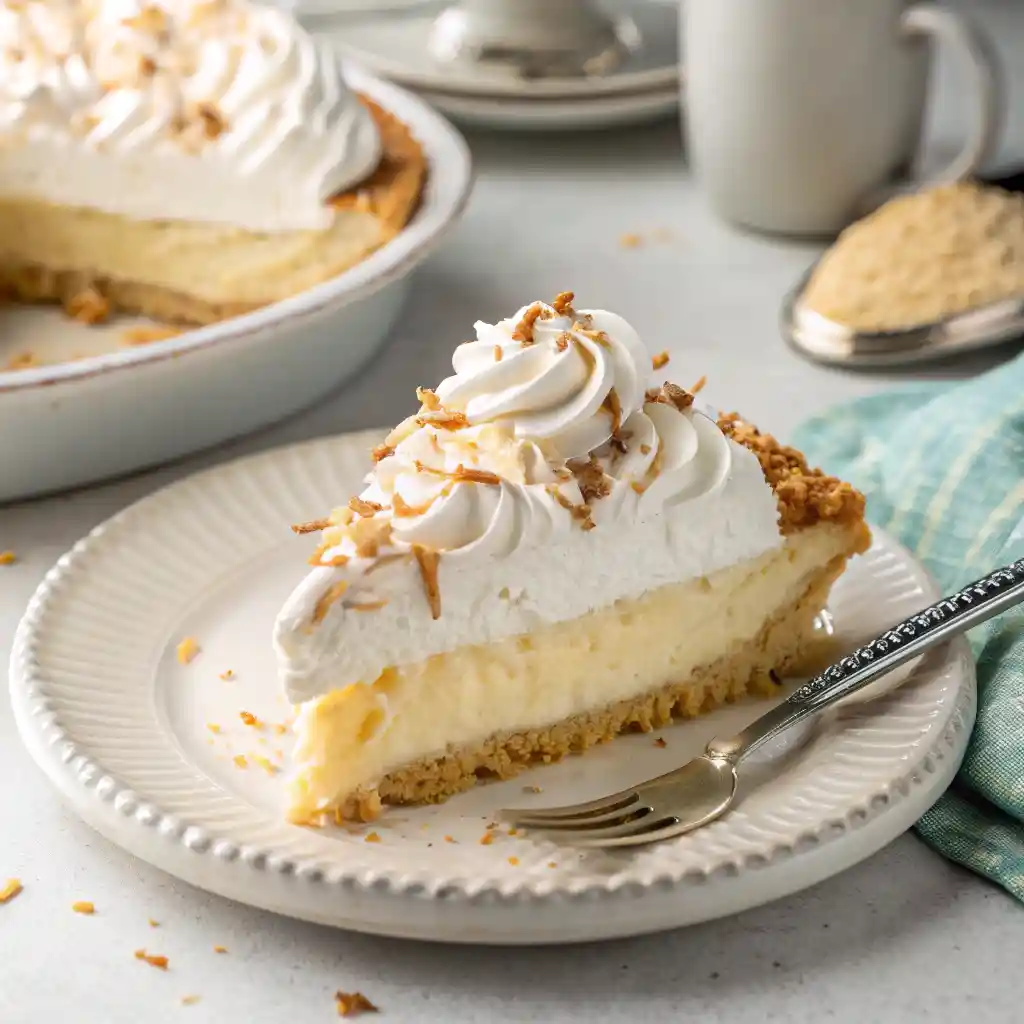
These simple ingredients team up to create a flaky base, rich custard, and billowy topping. The coconut milk and shredded coconut bring big flavor, while cornstarch and egg yolks thicken everything into a dreamy pudding texture.
For the pie
- 1 unbaked flaky Pie Crust (what I used) or All Butter Pie Crust*
- 4 large egg yolks
- 1/4 cup (30g) cornstarch
- 1 (14 ounce) can full fat coconut milk*
- 1 cup (240ml) half-and-half
- 2/3 cup (130g) granulated sugar
- 1/4 teaspoon salt
- 1 cup (80g) sweetened shredded coconut
- 2 Tablespoons (28g) unsalted butter, softened to room temperature
- 1 teaspoon pure vanilla extract
- optional: 1/2 teaspoon coconut extract
For the whipped cream
- 1 and 1/2 cups (360ml) cold heavy cream or heavy whipping cream
- 3 Tablespoons (20g) confectioners’ sugar or granulated sugar*
- 3/4 teaspoon pure vanilla extract
- optional for garnish: unsweetened coconut shavings, coconut chips, or sweetened shredded coconut*
Ingredient Spotlight & Substitutions For Coconut Cream Pie
Canned full fat coconut milk gives the pie its lush, coconutty personality. Carton coconut milk tastes weak and watery, so I save that for smoothies. Half and half and butter add richness, while egg yolks and cornstarch team up to thicken the custard.
Heavy cream whips into soft clouds for the topping, and sweetened shredded coconut adds chew and sweetness. You can tweak a few parts for dietary needs, but I always suggest you try the original version at least once.
| Ingredient | Why It Matters | Best Substitute(s) | Notes / Trade-Offs |
|---|---|---|---|
| Full fat canned coconut milk | Creates rich coconut flavor and creamy texture | Coconut cream (tested) | Coconut cream makes a thicker, richer filling, so you may whisk in a splash of extra half and half. |
| Half-and-half | Balances coconut milk so the filling stays silky, not heavy | Whole milk (tested), light cream | Whole milk keeps things a bit lighter, light cream makes it richer. Avoid skim. |
| Cornstarch | Helps the custard set firmly and slice cleanly | Arrowroot starch (experimental) | Arrowroot may give a slightly looser set, so chill longer. |
| Egg yolks | Add color, flavor, and structure | Vegan egg replacer (experimental) | I recommend another dessert if you avoid eggs, since this custard relies on yolks. |
| Flaky pie crust | Gives contrast to creamy filling | Gluten-free pie crust (tested) | Use your favorite gluten free crust recipe or mix and blind bake fully. |
| Heavy cream | Whips into stable topping | Coconut whipping cream (tested dairy free) | Chill the can and whip just the solid cream for a dairy free topper. |
| Sweetened shredded coconut | Adds chew and sweetness inside the pie | Unsweetened shredded coconut (tested) | Unsweetened coconut tastes less sweet, so you may add 1–2 extra tablespoons of sugar. |
Choosing & Preparing The Best Crust For Coconut Cream Pie
The crust sets the stage for your filling, so I treat it with a little extra love. You fully bake the crust before you add the custard, which keeps the bottom crisp under all that creamy goodness. For coconut cream pie, I lean toward a classic flaky shell, but other options taste lovely too.
Types of Crust You Can Use
- Traditional flaky crust: A mix of butter and shortening or all butter gives layers that shatter gently and pair beautifully with the soft filling.
- All butter crust: You get big flavor and crisp edges that taste almost like a buttery cracker against the coconut custard.
- Graham cracker crust: This option adds sweetness and crunch, and you mix it quickly if you feel short on time.
- Shortbread crust: Rich and cookie like, this one tastes amazing with coconut, but it can feel sweeter and heavier.
Blind Baking 101 (With Troubleshooting)
Blind baking means you bake the crust without filling. You chill the dough, roll it out, fit it in the pie dish, then prick the bottom and line it with parchment. Pie weights or dried beans keep the bottom flat and prevent puffing.
If the crust shrinks, you probably stretched the dough, so gently lift and nudge it into the corners next time. If it puffs, add more weights and press them into the edges. For over browned edges, shield the rim with foil during the last minutes of baking. Use this guidance along with the main instructions so your crust turns out sturdy and golden.
Step-by-Step Instructions: How To Make Coconut Cream Pie
You follow a simple rhythm for this pie: prepare and bake the crust, whisk the coconut custard on the stovetop, let everything chill, then top it with whipped cream and flakes of coconut. The trickiest part, tempering the egg yolks, feels much easier when you pour slowly and whisk constantly.
- I like to make sure my pie dough is prepared before I begin making coconut cream pie. Make pie dough the night before because it needs to chill in the refrigerator for at least 2 hours before rolling out and blind baking (next step).
- Preheat oven to 375°F (190°C). Fully blind bake the pie crust. (Follow how to blind bake pie crust instructions through step 9. I skip the optional dough strip trick in step 4, though that trick guarantees thick pie crust edges. Crimp or flute the pie crust edges before baking.) Cool pie crust completely. You can do this up to 3 days ahead of time. Cover cooled crust tightly and refrigerate until ready to fill.
- Whisk the egg yolks and cornstarch together. Set aside. Whisk the coconut milk, half-and-half, granulated sugar, and salt together in a medium saucepan over medium heat. Whisking occasionally, bring to a boil. Boil for 2 minutes, then reduce temperature to medium-low heat. Once boiling, remove about 1/2 cup of the mixture and, in a slow and steady stream, whisk into the egg yolk and cornstarch mixture. Keep those egg yolks moving so they don’t scramble. In a slow and steady stream, pour and whisk the egg yolk mixture into the pot.
- The pudding will immediately begin to bubble and thicken. Stand back and use caution as the bubbles may burst. Whisk and cook for 1 minute and 30 seconds. Remove from heat and stir in the coconut, butter, vanilla, and coconut extract (if using).
- Pour warm filling into cooled pie crust. Cover tightly with plastic wrap directly on the surface of the pudding (to prevent a skin from forming) and refrigerate for at least 3 hours or overnight until chilled and thickened. Pie may be refrigerated for up to 1 day.
- Using a hand mixer or a stand mixer fitted with a whisk attachment, whip the heavy cream, sugar, and vanilla extract on medium-high speed until medium peaks form, about 3-4 minutes. Medium peaks are between soft/loose peaks and stiff peaks and are the perfect consistency for topping and piping on desserts.
- Pipe or spread the whipped cream on top. I used Ateco 849 piping tip to pipe. Garnish with extra coconut, if desired. Chill the pie uncovered up to a few hours or you can serve it immediately.
- Cover leftovers and store in the refrigerator for up to 5 days.
You now have a gorgeous coconut cream pie ready for the fridge and a very happy future you.
Understanding the Coconut Custard Filling (Tempering Eggs Made Easy)
Tempering just means you slowly introduce hot liquid to the egg yolks so they warm up gently instead of scrambling. You whisk the yolks with cornstarch, then slowly stream in the hot coconut mixture while you keep the whisk moving.
When you pour everything back into the pot, the custard thickens to pudding consistency and large, slow bubbles rise to the surface. At this point the mixture should coat the back of a spoon. I love step photos here, especially a shot of the yolk mixture before and after tempering and a spoon trail through the finished custard.
Whipped Cream Topping for Coconut Cream Pie
Whipped cream peaks tell you when to stop mixing. Soft peaks barely hold shape and flop over, stiff peaks stand straight and can turn grainy. You want medium peaks for this pie, which curl slightly at the tip and spread beautifully over the custard.
To avoid over beating, stop the mixer every few seconds once the cream thickens and check the texture. You can pipe it with a large star tip like an Ateco 849, or simply swoop it on with a spoon and shower the top with coconut flakes.
Coconut Types 101: Toasted, Shredded & More For Coconut Cream Pie
Coconut comes in many shapes, and each one changes the texture of your coconut cream pie. Sweetened shredded coconut tastes soft and chewy and blends easily into the custard. Unsweetened shreds taste less sweet and a touch drier, so they work best as garnish.
Flakes or chips look pretty and add a satisfying crunch, especially on top of the whipped cream. To toast coconut, spread it on a baking sheet and bake at 325°F for 5 to 8 minutes, or toast it in a dry skillet over medium heat, stirring until golden. Use toasted coconut when you want a nutty, complex flavor, and leave it untoasted when you prefer a softer bite.
Coconut Cream Pie Success Tips (Crust, Filling, Whipped Cream)
- Chill the dough: Cold dough holds its shape and gives your crust strong, flaky layers for coconut cream pie.
- Dock and weight: Prick the crust and use enough pie weights so the bottom stays flat and crisp.
- Whisk constantly: Keep the custard moving so the eggs cook gently and never scramble.
- Watch the thickness: Stop cooking when the filling looks like warm pudding and large bubbles plop up.
- Keep everything cold for whipping: Chill the bowl and beaters so the cream whips quickly and holds those pretty peaks.
Make-Ahead, Storage & Freezing Coconut Cream Pie
Make ahead: You can blind bake the crust up to 3 days in advance and keep it wrapped in the fridge. You also cook the filling a day ahead and chill it in the crust, then whip and add the cream right before serving. If you need a truly no-bake option for busy days, try the ultimate no-bake banana pudding for similar creamy comfort.
Storage: Cover the finished pie loosely with plastic wrap or an inverted bowl and refrigerate it for up to 5 days.
Freezing: I prefer you freeze only the baked crust, tightly wrapped, for up to 2 months. Freezing the full pie softens the custard and whipped cream, so the texture feels less luxurious.
Variations & Creative Twists On Coconut Cream Pie
Once you feel comfortable with the base recipe, you can play a little. These ideas keep the spirit of the pie while giving it a fresh spin.
| Variation | What Changes | Flavor / Texture Notes |
|---|---|---|
| Chocolate coconut cream pie (lightly tested) | Spread a thin layer of chocolate ganache over the cooled crust before adding filling. | The pie tastes like a candy bar, with a firmer base and rich chocolate contrast. |
| Toasted coconut overload (tested) | Toast the coconut for the filling and garnish. | You get deeper, nuttier coconut flavor and a bit more chew. |
| Tropical twist with lime (creative) | Add lime zest to the custard and garnish with extra zest. | Bright citrus cuts through the richness and makes the pie feel extra refreshing. |
| Pineapple coconut cream pie (creative) | Fold very well drained crushed pineapple into the cooled custard. | The pie tastes like a piña colada, but the filling softens slightly. |
| Mini coconut cream tarts (tested) | Bake the crust in muffin tins or tart pans and fill each shell. | Adorable individual servings, perfect for parties or buffets. |
For another crowd-pleasing handheld pie, these cozy mini sweet potato pies are perfect alongside coconut cream.
Troubleshooting Coconut Cream Pie (Common Problems & Fixes)
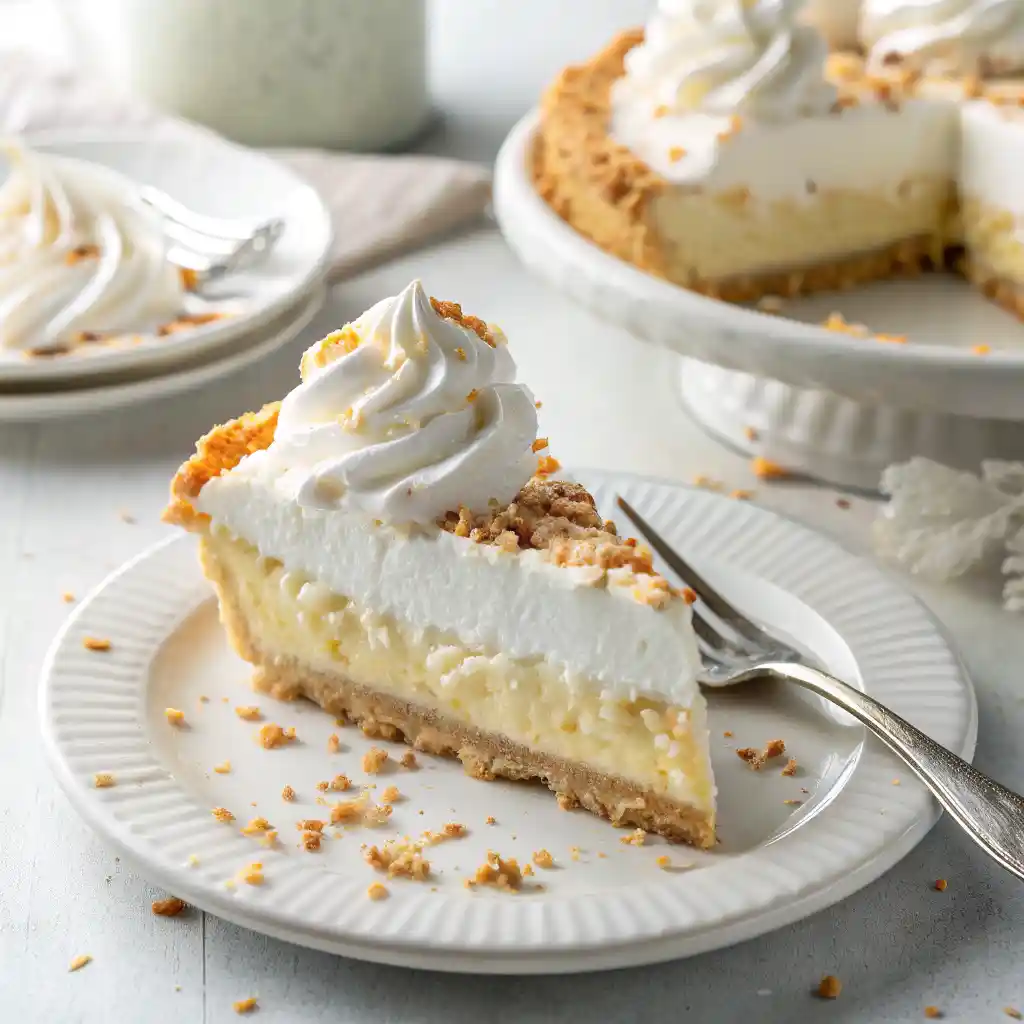
My filling is lumpy. Small lumps often come from cornstarch clumps or slightly scrambled eggs. Press the hot custard through a fine mesh strainer and whisk again, and next time whisk the yolks and cornstarch completely smooth before tempering.
My pie did not set and feels runny. You probably did not cook the custard long enough or measured the cornstarch lightly. Cook until big slow bubbles break the surface, then chill the pie overnight so the filling reaches its full firmness.
My crust tastes soggy. The crust likely needed more blind baking. Bake until the bottom looks golden, not pale, and cool it completely before you add the hot filling.
My whipped cream collapsed or wept. You might under whip or let the pie sit too long at room temperature. Whip to medium peaks and keep the pie chilled until serving.
My custard tastes eggy or scorched. High heat can cause this, so keep the burner at medium or medium low and whisk constantly so the bottom never burns.
Tools & Equipment For Coconut Cream Pie Success
- Pie dish & rolling pin for shaping and baking the crust.
- Parchment and pie weights to keep the crust flat and crisp.
- Medium heavy bottomed saucepan so the custard heats evenly without scorching.
- Whisk and mixing bowls for smooth tempering and whipping.
- Hand or stand mixer for easy whipped cream.
- Offset spatula, piping bag, plastic wrap for neat toppings and storage.
Serving & Presentation Ideas For Coconut Cream Pie
For clean slices, chill the pie thoroughly, then run a sharp knife under hot water and wipe it dry between cuts. I like to shower the top with toasted coconut, add a few chocolate curls, or grate a little lime zest over the whipped cream for color.
This coconut cream pie fits beautifully on holiday dessert tables, but it also feels perfect after a grilled summer dinner. Serve it straight from the fridge so every slice holds its shape and feels cool and creamy. Building a dessert spread? Pair it with a striking no-bake red velvet cheesecake for color and contrast.
Nutrition Information
I calculated this nutrition using standard ingredients and 8 slices per pie. Treat these numbers as an estimate, since crust thickness and toppings can change things a bit.
| Nutrient | Per slice (approx.) |
|---|---|
| Calories | 520 |
| Carbohydrates | 47 g |
| Protein | 6 g |
| Fat | 34 g |
| Saturated Fat | 23 g |
| Fiber | 2 g |
| Sugar | 30 g |
| Sodium | 210 mg |
Frequently Asked Questions About Coconut Cream Pie
Can I use coconut cream instead of coconut milk in this coconut cream pie? Yes, you can, and you get a richer filling, so add a splash more half and half if the custard feels too thick.
Can I make this pie dairy free? You can use coconut cream for the whipped topping and a dairy free crust, but I recommend you keep the half and half in the filling for best texture.
Can I use graham cracker or gluten free crust? Yes, both work well, just blind bake fully and cool completely before adding the filling.
How long can coconut cream pie sit out? Keep it chilled and only leave it at room temperature for about 2 hours for food safety.
Conclusion
You now have everything you need to turn simple pantry staples into a bakery worthy coconut cream pie. Once you break it into steps, this dessert feels much less intimidating, and you end up with a silky custard, crisp crust, and a cloud of whipped cream that everyone remembers.
If you try it, come back and tell me how it went, what crust you used, or which twist you tried. Leave a comment, rate the recipe, or share a photo so we can all cheer you on in our cozy little baking corner of the internet.