Crispy, Irresistible Coconut Shrimp Recipe You’ll Crave
Kick off your meal with a crowd-pleaser that always brings smiles: golden, crispy Coconut Shrimp coated in coconut and Panko with a zesty homemade dip. This delightful appetizer comes together in under 45 minutes, perfect for weeknights or gatherings.
Why You’ll Love This Homemade Coconut Shrimp Recipe
- Ultimate Crispy Perfection: We’re talking a shatteringly crisp coating that perfectly encases each succulent shrimp.
- Secret Dipping Sauce Bliss: My simple, yet incredibly flavorful sauce is the perfect tangy, spicy, and creamy counterpoint to the sweet coconut.
- Surprisingly Easy Process: With a few smart techniques, you’ll achieve restaurant-quality results without the fuss, even if you’re new to frying.
- Better Than Store-Bought: You control the quality of ingredients, ensuring fresher, more vibrant flavors and a delightful crunch that frozen options just can’t match.
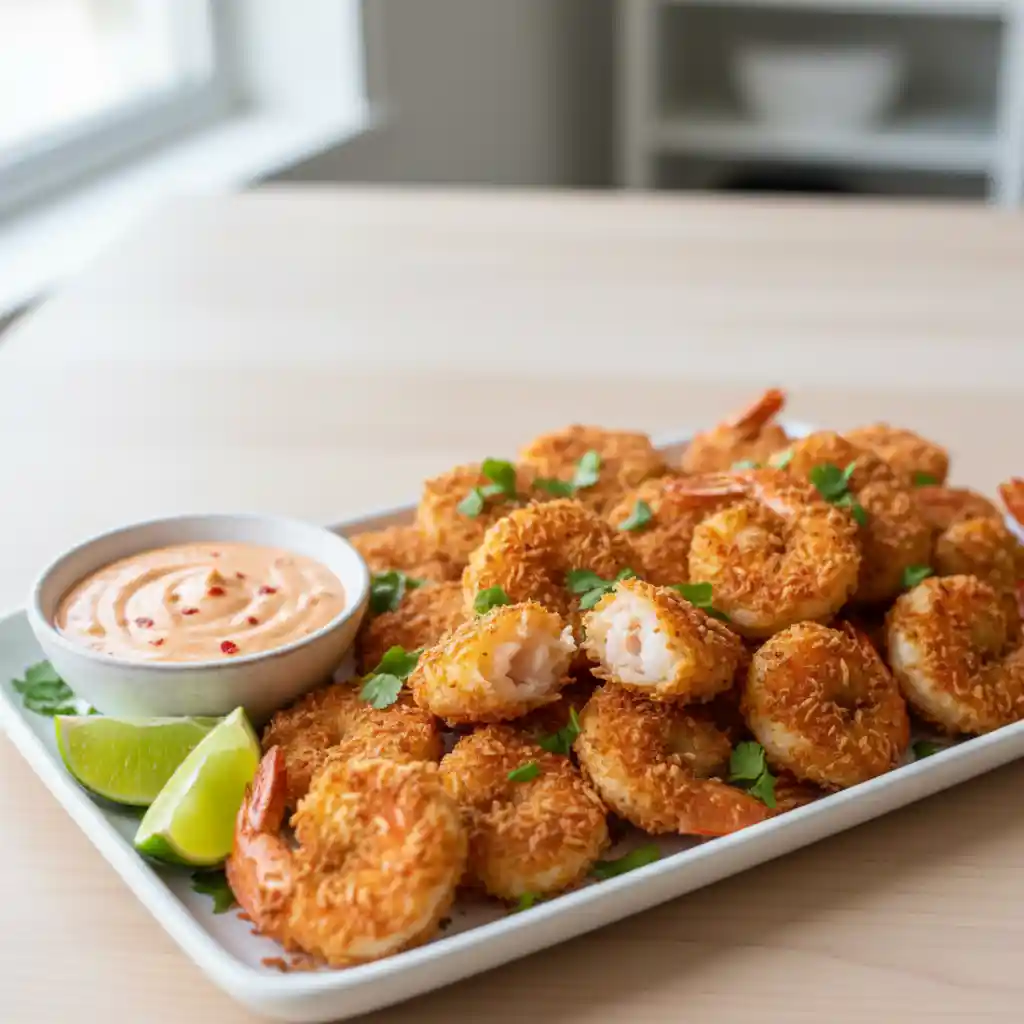
Ultimate Coconut Shrimp Recipe: Crispy, Golden, Easy
Ingredients
Equipment
Method
- To make the dipping sauce, in a small bowl, whisk together the mayonnaise, Sriracha, and Thai sweet chili sauce. Chill until serving time.
- In a shallow dish, add flour and salt and pepper to taste (I like 1/2 teaspoon and 1/4 teaspoon pepper). In a second shallow dish, add eggs and beat lightly. In a third shallow dish, combine panko and coconut. Stir to combine.
- Working with one shrimp at a time, dredge in flour and shake off excess. Dip in eggs and tap gently on side of dish to remove excess. Add to panko-coconut mixture and press gently until crumbs adhere. Transfer to a large plate and repeat with remaining shrimp (shrimp can be wrapped in plastic and refrigerated for up to 2 hours).
- Line rimmed baking sheet or large plate with 3 layers of paper towels. In a large saucepan over medium-high heat, heat canola oil until shimmering. Add shrimp in batches and fry until deep golden brown and cooked through, about 2 to 3 minutes per side (the shrimp should reach 120 degrees on an internal thermometer).
- Drain shrimp well on paper towels. Repeat with remaining shrimp and serve with sauce.
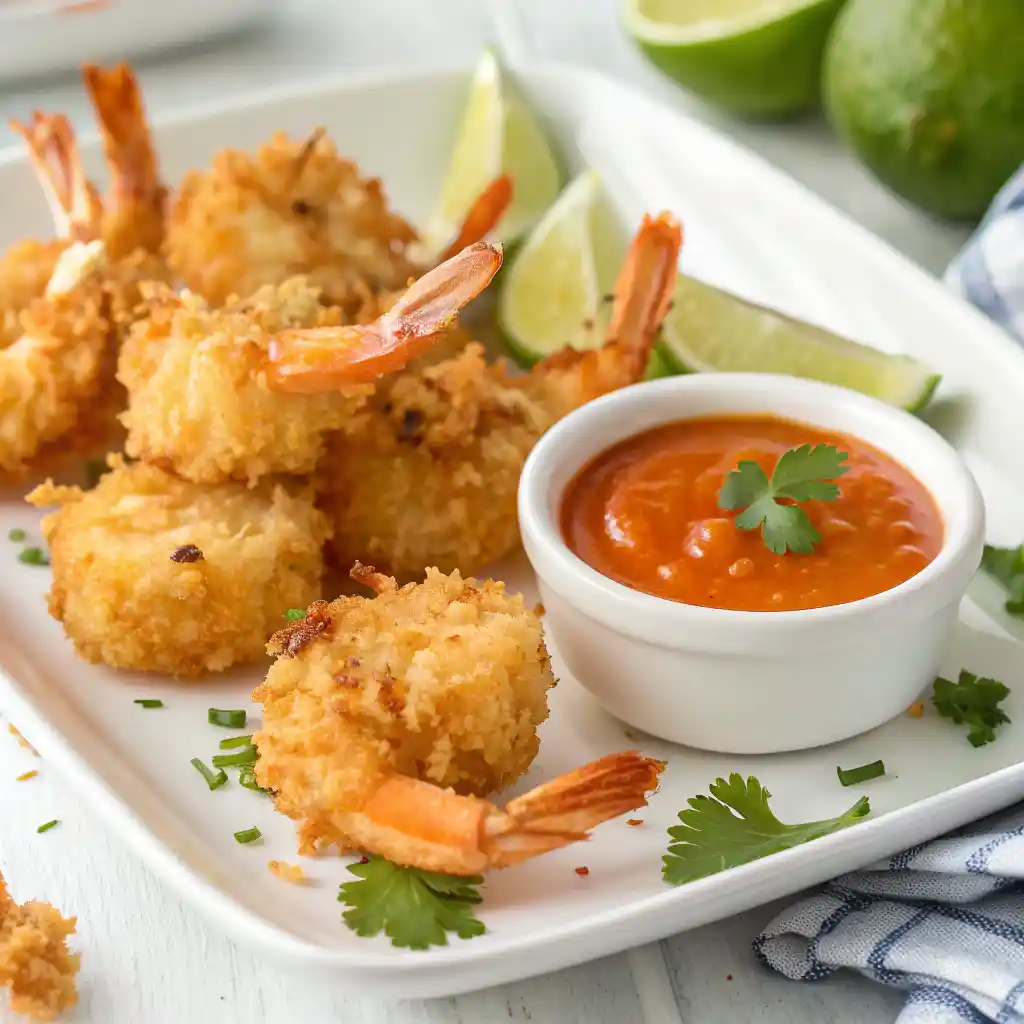
Essential Kitchen Tools for Perfect Coconut Shrimp
- Shallow Dishes (3)
- Large Saucepan or Dutch Oven
- Deep-Fry Thermometer
- Tongs
- Slotted Spoon or Spider Strainer
- Wire Cooling Rack (set over a Baking Sheet)
- Paper Towels
Ingredients You’ll Need for the Best Coconut Shrimp
Here’s what you’ll need to make this delicious Coconut Shrimp recipe at home:
- 1/2 cup mayonnaise
- 1 tablespoon Sriracha
- 1 tablespoon Thai sweet chili sauce
- 1/3 cup all-purpose flour
- Salt and freshly ground black pepper
- 2 large eggs, beaten
- 3/4 cup Panko bread crumbs
- 1 cup sweetened shredded coconut
- 1 pound jumbo raw shrimp (thawed, peeled, and deveined)
- 2 cups canola oil, for frying
Ingredient Notes & Smart Substitutions
Here are a few swaps to consider:
| Ingredient | Substitution | Impact on Flavor/Texture |
|---|---|---|
| Canola Oil | Vegetable oil, peanut oil, or refined coconut oil | May slightly alter flavor profile. Peanut oil offers a higher smoke point. |
| Sweetened Coconut | Unsweetened shredded coconut | Less sweet; may toast lightly for added flavor. |
| Jumbo Shrimp | Large or medium shrimp | Smaller shrimp cook faster; adjust frying time accordingly. |
| Sriracha | Gochujang or a pinch of cayenne pepper | Adds heat and a slightly different fermented or fiery flavor profile. |
| Thai Sweet Chili Sauce | Honey or maple syrup mixed with a dash of chili garlic sauce | Offers sweetness with adjustable heat. |
Crafting the Irresistible Dipping Sauce
This dipping sauce is the perfect complement to our crispy Coconut Shrimp recipe! It’s a simple blend that packs a flavorful punch.
To make the dipping sauce, in a small bowl, whisk together the mayonnaise, Sriracha, and Thai sweet chili sauce. Chill until serving time.
Want to mix it up? Try adding a tablespoon of chopped fresh cilantro or a squeeze of fresh lime juice to the sauce for an extra zing. Another delightful option is to stir in a spoonful of mango or pineapple salsa for a burst of fruity sweetness.
Step-by-Step Instructions for Your Best Coconut Shrimp Recipe
Let’s get cooking! Follow these easy steps to create the most delicious Coconut Shrimp recipe.
Mastering Your Dredging Station: For Crispy, Golden Shrimp
First, let’s set up our dredging station – this is key to that perfect coating on your shrimp! In three separate shallow dishes:
- Flour: Combine the 1/3 cup all-purpose flour with salt and freshly ground black pepper to taste (I like about 1/2 teaspoon salt and 1/4 teaspoon pepper).
- Eggs: Lightly beat the 2 eggs in the second dish.
- Panko & Coconut: In the third dish, mix together the 3/4 cup Panko bread crumbs and 1 cup sweetened shredded coconut. Stir to combine these well.
Now, working with one shrimp at a time:
- Dredge each shrimp in the seasoned flour, ensuring it’s lightly coated, and shake off any excess.
- Next, dip the floured shrimp into the beaten eggs, letting any excess drip back into the dish.
- Finally, place the egg-dipped shrimp into the Panko-coconut mixture. Gently press the crumbs onto the shrimp to ensure they adhere well.
- Transfer the coated shrimp to a large plate or baking sheet. Repeat this process with all your shrimp. You can refrigerate the coated shrimp for up to 2 hours before frying if you’re prepping ahead.
Deep Frying to Perfection: Optimal Oil Temperature and Visual Cues
To ensure your Coconut Shrimp recipe turns out perfectly golden and crispy:
- Line a rimmed baking sheet or large plate with 3 layers of paper towels. This will be for draining your cooked shrimp.
- In a large, heavy-bottomed saucepan or Dutch oven, heat about 2 cups of canola oil over medium-high heat. You want the oil to reach about 350-375°F (175-190°C). Using a deep-fry thermometer is the best way to ensure accuracy, but if you don’t have one, test by dropping a tiny bit of the Panko-coconut mixture into the oil – it should sizzle immediately and float to the top.
- Carefully add the shrimp to the hot oil in batches. Don’t overcrowd the pan, as this will lower the oil temperature and result in greasy, soggy shrimp. Fry about 3-5 shrimp at a time, depending on the size of your pan.
- Fry for about 2 to 3 minutes per side, or until the shrimp are a beautiful deep golden brown and cooked through. They should reach an internal temperature of 120°F (49°C). The coating will be beautifully crisp, and the shrimp will curl slightly.
- Using tongs or a slotted spoon, carefully remove the cooked shrimp from the oil and drain them well on the prepared paper towel-lined baking sheet.
- Repeat with the remaining shrimp, ensuring the oil returns to the proper temperature between batches. Serve your amazing Coconut Shrimp recipe immediately with the chilled dipping sauce!
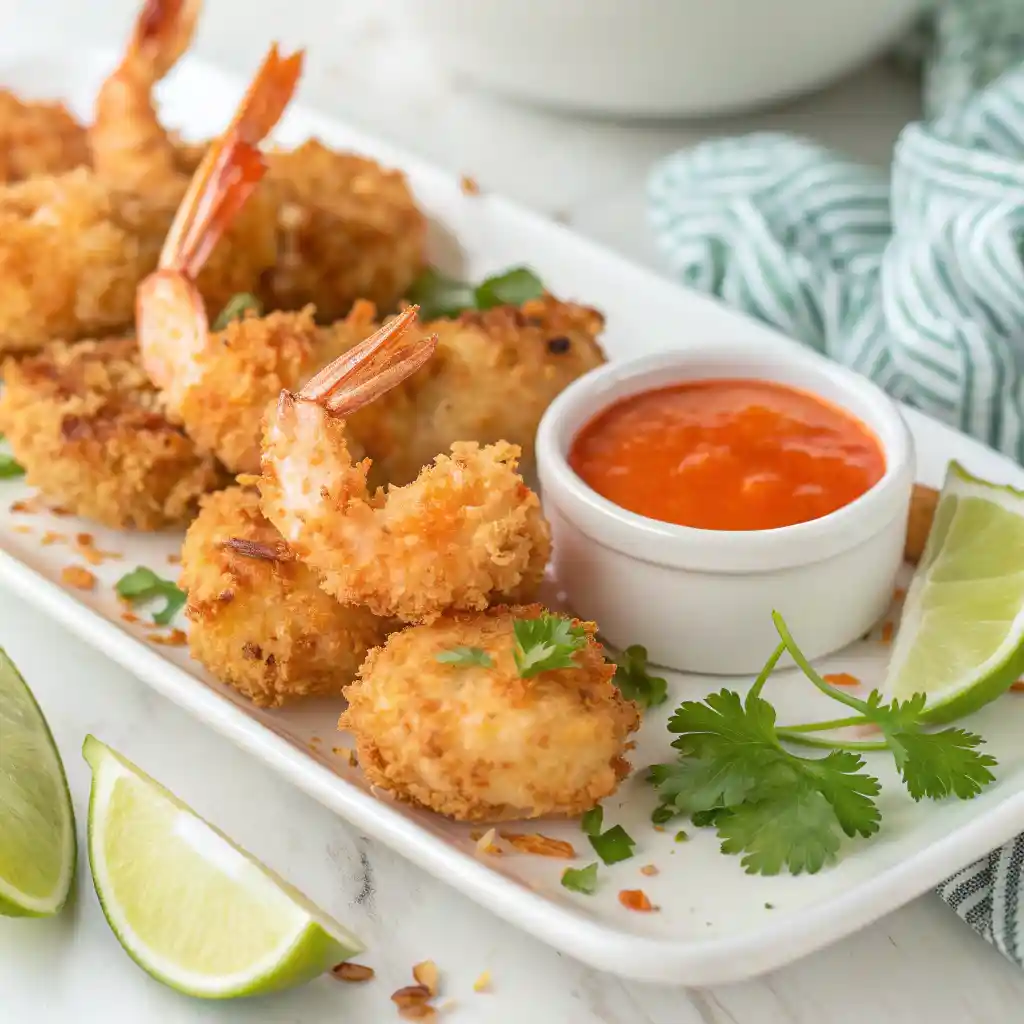
Alternative Cooking Methods: Baked, Air Fryer, Pan-Fried Coconut Shrimp
While deep-frying yields the ultimate crispiness for this Coconut Shrimp recipe, here are some alternatives if you’re looking for a lighter option or don’t want to deep-fry:
| Method | Instructions | Pros | Cons |
|---|---|---|---|
| Baked | Preheat oven to 400°F (200°C). Place coated shrimp on a wire rack set over a baking sheet. Lightly mist or brush with oil. Bake for 10-15 minutes, flipping halfway, until golden and cooked through. | Healthier, less hands-on, easy cleanup. | Coating may not be as crispy; can dry out if overcooked. |
| Air Fryer | Preheat air fryer to 380°F (190°C). Arrange coated shrimp in a single layer in the basket, spraying lightly with oil. Air fry for 6-9 minutes, flipping halfway, until golden brown and crispy. | Very crispy results with less oil, quick cooking time. | Limited batch size; best for smaller quantities. |
| Pan-Fried | Heat 1/4 inch of oil in a skillet over medium-high heat. Fry shrimp in batches for 2-3 minutes per side until golden brown and cooked through. Drain on paper towels. | Good crispiness, quicker than deep-frying, uses less oil. | Can be less evenly cooked; requires more attention than baking/air frying. |
Troubleshooting Common Coconut Shrimp Issues
Even the best Coconut Shrimp recipe can have hiccups! Here are some common issues and how to solve them:
- Soggy Coating: This usually happens when shrimp are overcrowded in the fryer, oil temperature is too low, or they sit too long after frying without proper draining on a wire rack. Solution: Fry in small batches, maintain oil temperature, and drain on a wire rack.
- Coating Falling Off: Shrimp might not be patted dry enough, or they weren’t pressed firmly into the Panko-coconut mixture. Solution: Ensure shrimp are very dry before dredging. Press gently but firmly into the crumb coating.
- Overcooked Shrimp: Shrimp cook very quickly! Overcooking leads to a rubbery texture. Solution: Stick to the recommended frying time and watch for visual cues. Frying in batches helps maintain consistent heat.
- Uneven Browning: This can occur if shrimp are clumped together or the oil isn’t hot enough. Solution: Ensure shrimp are in a single layer and the oil is at the correct temperature.
Make-Ahead Magic: Prepare Your Coconut Shrimp in Advance
Entertaining can be stressful, but this Coconut Shrimp recipe can ease the burden!
- The Dipping Sauce: Whisk together the mayonnaise, Sriracha, and Thai sweet chili sauce up to 2 days ahead. Store in an airtight container in the refrigerator.
- Coating the Shrimp: You can dredge the shrimp in the flour, egg, and Panko-coconut mixture up to 2 hours before frying. Arrange them in a single layer on a baking sheet, cover loosely with plastic wrap, and refrigerate. This chilling time actually helps the coating adhere even better!
- Frying: It’s best to fry the shrimp just before serving for optimal crispiness. However, if absolutely necessary, you can fry them up to 30 minutes ahead and keep them warm in a single layer on a wire rack in a low oven (around 200°F / 95°C).
Serving Suggestions & Perfect Pairings
This Coconut Shrimp recipe is wonderfully versatile!
As an Appetizer: Serve it on a platter with lemon wedges and the dipping sauce. It’s a guaranteed hit at parties and game nights, especially alongside quick turkey roll ups.
As a Light Meal: Pair it with fluffy jasmine rice, a simple green salad tossed with a sesame ginger dressing, or some steamed asparagus for a delightful weeknight dinner. For a tropical touch, add a side of caramelized grilled pineapple.
On an Appetizer Platter: Combine it with other small bites like spring rolls, mini crab cakes, or a cheese board for a truly impressive spread. You can also include easy homemade stromboli to round out the savory options.
Drink Pairings:
- Alcoholic: A crisp Sauvignon Blanc, a light-bodied Pinot Grigio, a tropical Mojito, or a cold lager complement the flavors beautifully.
- Non-Alcoholic: Try a refreshing sparkling limeade, a fruity iced tea, or a vibrant pineapple juice.
Safety First: Handling Shrimp & Hot Oil Safely
Safety is paramount when making this Coconut Shrimp recipe, especially when frying.
- Shrimp Handling: Always thaw shrimp in the refrigerator, not at room temperature. Wash your hands thoroughly before and after handling raw shrimp to prevent cross-contamination.
- Hot Oil Precautions:
- Use a deep, heavy-bottomed pot and don’t fill it more than halfway with oil.
- Never leave hot oil unattended.
- Keep a splatter screen handy to minimize oil popping.
- Ensure children and pets are kept at a safe distance from the stove.
- Have a lid or baking sheet nearby to smother flames if a grease fire occurs. Never use water on a grease fire.
- Allow oil to cool completely before discarding or storing.
Storing & Freezing Your Delicious Leftovers
If, by some chance, you have leftover Coconut Shrimp recipe creations, here’s how to store them:
- Refrigerator: Let the cooked shrimp cool completely. Store them in an airtight container in the refrigerator for up to 2 days.
- Reheating: To regain some crispiness, reheat them in a single layer on a baking sheet in a preheated oven at 375°F (190°C) for about 5-8 minutes, or in an air fryer at 350°F (175°C) for 3-5 minutes. Microwaving will make them soft.
- Freezing: You can freeze cooked shrimp. Let them cool completely, then freeze in a single layer on a baking sheet until solid. Transfer to a freezer-safe bag or container for up to 2 months. Reheat as directed above.
Frequently Asked Questions
Got questions about this Coconut Shrimp recipe? I’ve got answers!
- What other sauces could I serve with Coconut Shrimp? Sweet chili sauce is classic, but a spicy mango salsa, a creamy avocado-lime dip, or even a simple sweet and sour sauce are delicious alternatives.
- How can I make Coconut Shrimp a meal? Serve your coconut shrimp over jasmine rice with steamed vegetables like broccoli or snap peas, or alongside a tropical-inspired salad for a complete and satisfying meal.
- How do you make gluten-free Coconut Shrimp? Substitute the all-purpose flour with a gluten-free all-purpose flour blend and ensure your Panko bread crumbs are certified gluten-free.
- Can I use frozen shrimp for this Coconut Shrimp recipe? Absolutely! Just ensure they are completely thawed and, most importantly, thoroughly patted dry before you begin the dredging process.
Nutritional Information
Disclaimer: Nutritional values are estimates and can vary based on specific ingredients and portion sizes used.
| Nutrient | Amount (approx. per serving) |
|---|---|
| Calories | 350-400 |
| Protein | 18-22g |
| Fat | 20-25g |
| Carbohydrates | 25-30g |
| Sodium | Varies based on salt added |
Conclusion
I just love how this Coconut Shrimp recipe turns out – golden, crispy, and utterly delicious! It’s a testament to how simple ingredients and a little care can create something truly special. I hope you feel inspired to bring this joy into your own kitchen. Don’t hesitate to leave a comment below with your thoughts, questions, or any fun twists you tried. I can’t wait to hear about your culinary adventures with The Meal Craft! Let’s keep cooking up happiness together.