Master the Art of Easy Crusty Bread Recipe
There’s magic in pulling crusty bread from the oven, filling your home with incredible aroma from the simplest ingredients. This foolproof, no-knead recipe delivers artisan-quality loaves with just minutes of hands-on time—get ready to impress.
What Makes This Crusty Bread Recipe So Special?
- Foolproof results, even for beginners! You truly don’t need to be a master baker to achieve a stunning loaf. The no-knead method does all the heavy lifting.
- Only 4 pantry staples needed! Flour, yeast, salt, and water are all it takes. It’s a testament to how humble ingredients can create something extraordinary.
- The aroma filling your kitchen is pure bliss! Seriously, as this bakes, your home will smell like the best bakery in town. It’s cozy and inviting.
- Minimal active time, maximum flavor and texture. You’ll be amazed at how little effort is required for such an impressive result.
The Only Ingredients You’ll Need
- 3 cups (450g) flour: I love using bread flour for its higher protein content, which gives a chewier crumb, but all-purpose flour works beautifully too!
- 2 tsp instant or rapid rise yeast: This is my go-to for its convenience. If you’re using active dry yeast, just make sure to “bloom” it first (more on that in the notes!).
- 2 tsp cooking/kosher salt (NOT table salt): Kosher or sea salt has a cleaner flavor and coarser texture that integrates better into the dough. Table salt can be too fine and sometimes lends a metallic taste.
- 1 1/2 cups (375 ml) very warm tap water (NOT boiling or super hot): Aim for water around 110-115°F (43-46°C). Too hot, and you’ll kill the yeast; too cool, and it won’t activate properly.
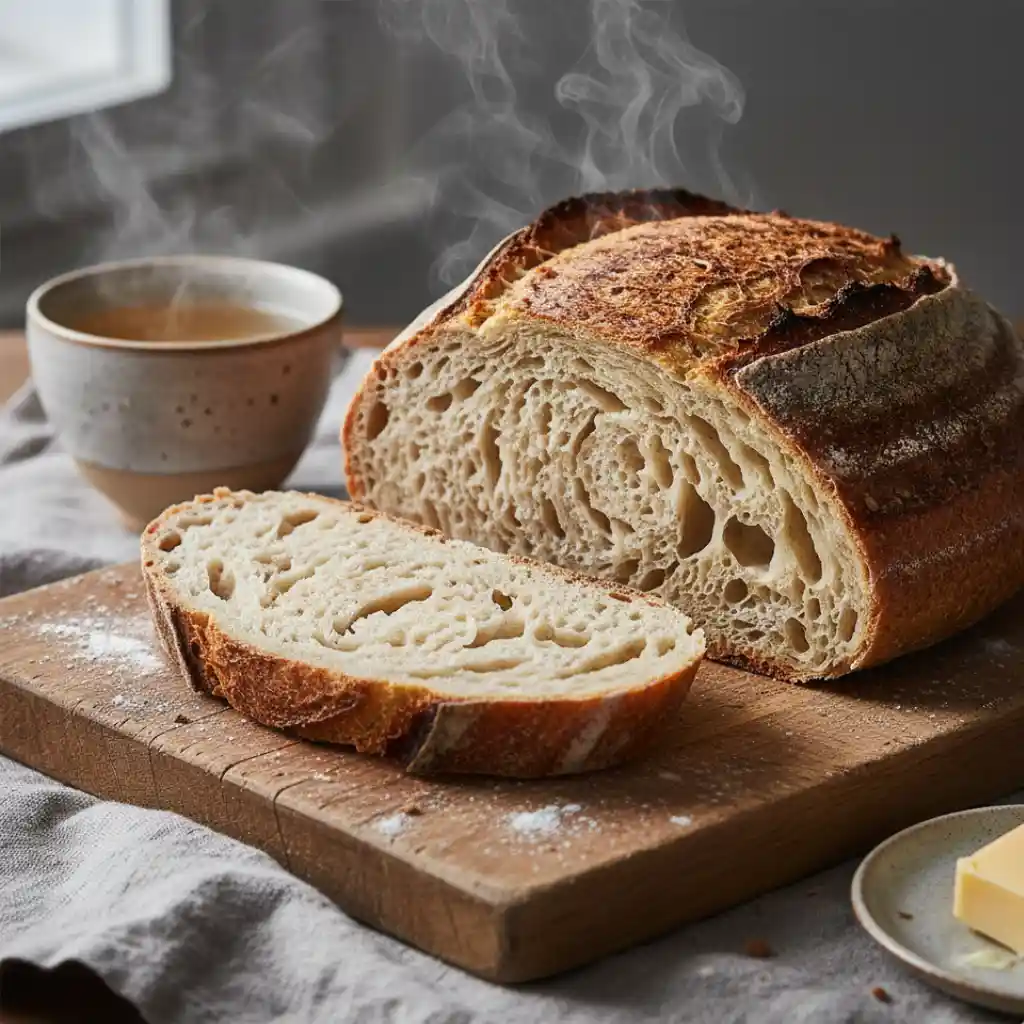
Easy Crusty Bread Recipe for Stunning Artisan Loaves
Ingredients
Equipment
Method
- Mix Dough: Mix flour, yeast and salt in a large bowl. Add water, then use the handle of a wooden spoon to mix until all the flour is incorporated. Dough will be wet and sloppy – not kneadable, but not runny like cake batter. Adjust with more water or flour if needed for right consistency (see video at 17 sec, Note 5).
- Rise: Cover with cling wrap or plate, leave on counter for 2 – 3 hours until it doubles in volume, it’s wobbly like jelly and the top is bubbly (see video at 24 seconds). If after 1 hour it doesn’t seem to be rising, move it somewhere warmer (Note 6).
- Optional – refrigerate for flavour development (Note 9): At this stage, you can either bake immediately (move onto Step 5) or refrigerate for up to 3 days.
- Take chill out of refrigerated dough – if you refrigerated dough per above, leave the bowl on the counter for 45 – 60 minutes while the oven is preheating. Cold dough does not rise as well.
- Preheat oven (Note 7) – Put dutch oven in oven with lid on (26cm/10" or larger). Preheat to 230°C/450°F (220° fan) 30 minutes prior to baking. (Note 8 for no dutch oven)
- Shape dough: Sprinkle work surface with 1 tbsp flour, scrape dough out of bowl. Sprinkle top with 1/2 tbsp flour.
- Using a dough scraper or anything of similar shape (cake server, large knife, spatula), fold the sides inwards (about 6 folds) to roughly form a roundish shape. Don’t be too meticulous here – you’re about to deform it, it’s more about deflating the bubbles in the dough and forming a shape you can move.
- Transfer to paper: Slide a large piece of parchment/baking paper (not wax paper) next to the dough, then flip the dough upside down onto the paper (ie seam side down, smooth side up). Slide/push it towards the middle, then reshape it into a round(ish) shape. Don’t get too hung up about shape. In fact, lopsided = more ridges = more crunchy bits!
- Dough in pot: Remove piping hot dutch oven from oven. Use paper to place dough into pot, place lid on.
- Bake 30 minutes covered, then 12 minutes uncovered or until deep golden and crispy.
- Cool on rack for 10 minutes before slicing.
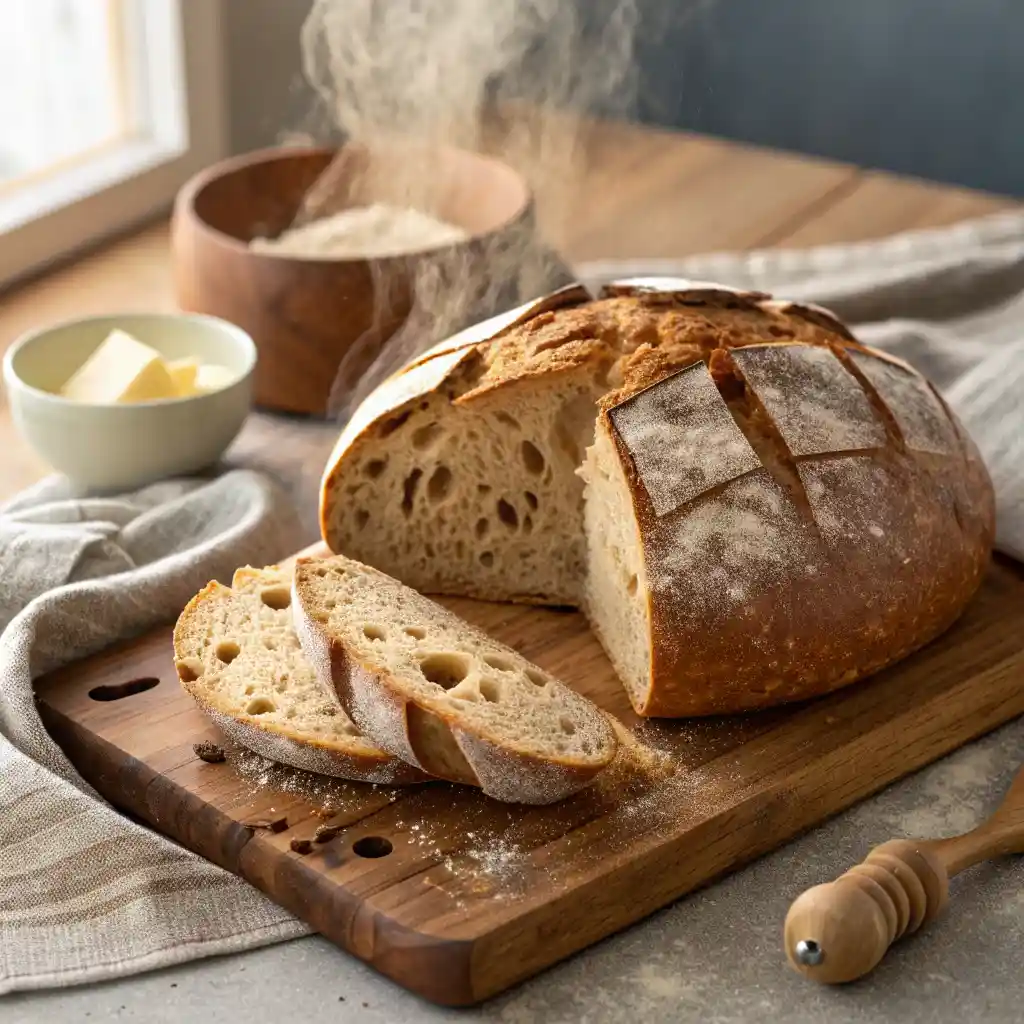
Step-by-Step Guide to Your Perfect Crusty Bread Loaf
Let’s transform these simple ingredients into a glorious loaf of crusty bread Recipe!
- Mix Dough: In a large bowl, whisk together the flour, yeast, and salt. Add the very warm water. Use the handle of a sturdy wooden spoon to mix until all the flour is just incorporated. Remember, the dough will be wet and shaggy! (See the quick video demo at 0:17 in the original notes for a visual).
- Rise: Cover the bowl tightly with plastic wrap or a plate. Let it sit on your counter for 2 to 3 hours, or until it has doubled in volume, looks wobbly like jelly, and is beautifully bubbly on top. (Check out the video at 0:24 for what to look for). If it’s not showing much action after an hour, find a warmer spot in your kitchen.
- Optional – Refrigerate for Flavor Development: Here’s where you can elevate your crusty bread recipe even further! Once the dough has risen, you can bake it immediately, or cover it and pop it in the refrigerator for up to 3 days. This slow fermentation really deepens the flavor.
- Bring Dough to Room Temperature: If you refrigerated your dough, take it out about 45-60 minutes before you plan to bake. Let it sit on the counter while your oven preheats. Cold dough doesn’t achieve that amazing oven spring as well.
- Preheat Oven and Dutch Oven: This step is crucial for a great crust! Place a large Dutch oven (at least 26cm/10 inches) with its lid on into your oven. Preheat the oven to 230°C/450°F (220°C fan/425°F convection) for at least 30 minutes. A screaming hot pot is key! (If you don’t have a Dutch oven, check Note 8 for alternatives).
- Shape the Dough: Lightly dust your work surface with about 1 tablespoon of flour. Gently scrape the sticky dough out of the bowl onto the floured surface. Sprinkle the top with another 1/2 tablespoon of flour.
- Form the Loaf: Using a dough scraper, cake server, or even a large spatula, gently fold the sides of the dough inwards towards the center, aiming for about 6 folds. Don’t worry about making it perfect; you’re just gently shaping it and deflating some of the large air bubbles.
- Transfer to Parchment Paper: Lay a large piece of parchment paper (not wax paper!) next to your shaped dough. Carefully flip the dough upside down onto the parchment paper, so the folded seam is now on the bottom and the smooth side is up. Gently nudge it into a roundish shape. Don’t stress about perfection – a slightly lopsided loaf often means more glorious crunchy bits!
- Bake Your Loaf: Carefully remove the extremely hot Dutch oven from the oven. Using the parchment paper as a sling, gently lower the dough into the hot pot. Place the lid back on.
- Bake: Bake with the lid on for 30 minutes. Then, remove the lid and bake for another 12-15 minutes, or until the crust is a deep golden brown and sounds wonderfully hollow when tapped.
- Cooling is Crucial: Transfer the baked crusty bread to a wire rack immediately. Let it cool for at least 10 minutes before slicing. This step is vital for the internal structure to set, preventing a gummy texture.
Mastering the Art of Crust: The Science Behind the Perfect Bake
Ever wonder why this crusty bread recipe bakes up so beautifully? It’s a bit of kitchen science!
- The Power of Steam: When you first place the dough into the hot Dutch oven and cover it, the trapped moisture from the dough creates steam. This steam keeps the surface of the bread soft for the initial part of the bake, allowing it to expand dramatically – that’s “oven spring”!
- The Maillard Reaction and Caramelization: Once you remove the lid, the high heat and dry air in the oven work their magic. Sugars on the dough’s surface react with amino acids (Maillard reaction) and caramelize, browning the crust to that irresistible deep golden hue and developing complex, toasty flavors.
- Starch Gelatinization: The heat also causes the starches on the bread’s surface to swell and set, contributing significantly to that final satisfying crisp texture we all love.
Scoring Your Loaf: An Artistic Touch for Better Crusty Bread
Adding a few scores to your crusty bread recipe before baking isn’t just for looks; it’s functional art!
- Why Score Bread? Scoring controls how and where your bread expands as it bakes. Without it, the dough might burst open in unpredictable places. Scoring creates a beautiful, intentional pattern and allows for maximum oven spring.
- How to Score: Once your dough is in the hot Dutch oven and ready for baking (or just before), use a very sharp knife, a baker’s lame, or even a clean razor blade. Make a decisive, swift cut about 1/2 inch deep. For a simple loaf, a single, slightly curved slash down the middle works wonderfully.
- Simple Scoring Patterns: Feel free to get creative! A simple cross pattern is classic. You can also try a series of parallel lines or a gentle curve. The key is to be confident with your cut. Even slightly imperfect scores add rustic charm!
Troubleshooting Common Crusty Bread Challenges
Don’t worry if your first loaf isn’t absolutely perfect. Every baker has hiccups! Here are a few common issues with this crusty bread recipe:
- Dough Not Rising: Your yeast might be old, the water could have been too hot or too cool, or your kitchen might be too chilly. Try proofing your yeast before mixing or find a warmer spot for the rise.
- Loaf is Flat: This can happen from overproofing (letting it rise too long), not shaping enough to create tension, or the dough being excessively wet. Gentle shaping and watching the rise time are key.
- Crust is Burning: Your oven might run hot. Try lowering the temperature slightly in the second stage or place a baking sheet on the rack below your Dutch oven to catch any errant drips and create a heat shield.
- Interior is Gummy/Dense: This usually means the bread wasn’t baked long enough or wasn’t cooled sufficiently. Ensure it’s deeply golden and sounds hollow, and always let it cool for at least 10 minutes.
- Crust Isn’t Crispy Enough: Make sure your oven is fully preheated and consider baking uncovered for a few extra minutes. Reheating leftover slices can also revive crispness.
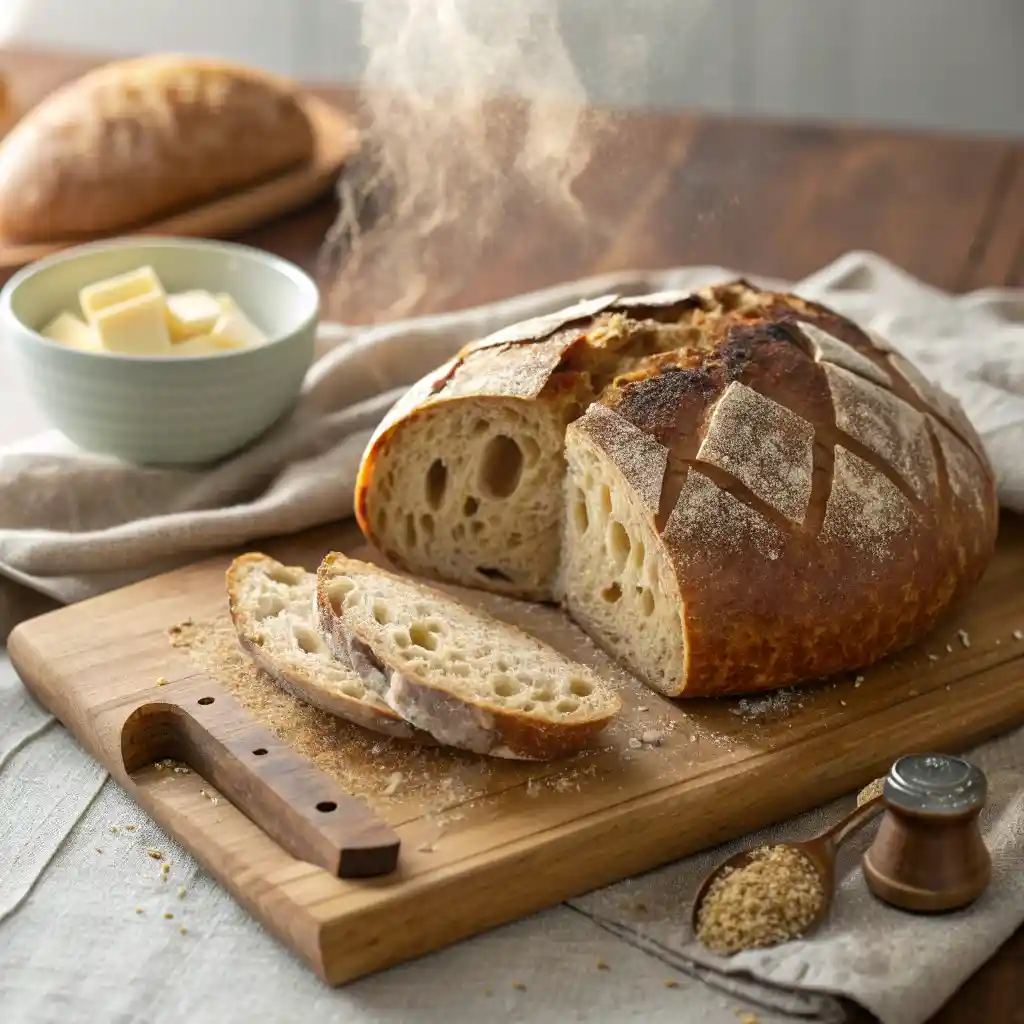
Flour Power: Choosing the Right Flour for Your Crusty Bread
Let’s talk flour for your crusty bread recipe!
- Bread Flour vs. All-Purpose Flour: Bread flour has a higher protein content (around 12-14%) compared to all-purpose (around 10-12%). This extra protein forms stronger gluten strands, resulting in a chewier texture and better structure. All-purpose is a fine substitute if that’s what you have!
- Using Whole Wheat Flour: If you want to add some whole wheat goodness, start by substituting about 20-30% of the white flour with whole wheat. Too much whole wheat can make the loaf denser and affect the rise because the bran and germ interfere with gluten development. You can gradually increase the percentage as you get comfortable.
- Other Flour Varieties: While this recipe is optimized for wheat flours, you could experiment with small amounts of rye or spelt. Be aware that these will significantly alter the texture and flavor, and you might need to adjust the water content.
Variations to Spark Your Creativity
Once you’ve mastered the basic crusty bread recipe, let’s have some fun! Mix-ins are a fantastic way to personalize your loaf.
| Variation Name | Mix-ins | Flavor Profile & Pairing Suggestions |
|---|---|---|
| Cheesy Garlic Herb | 1/2 cup shredded cheddar, 1 tbsp dried herbs, 2 cloves minced garlic | Savory, perfect with soup or as a side for pasta. |
| Rosemary & Olive Oil | 2 tbsp chopped fresh rosemary, 1 tbsp olive oil (mixed into dough) | Mediterranean-inspired, wonderful with salads or grilled meats. |
| Cinnamon Sugar Swirl | 1/4 cup sugar, 1 tbsp cinnamon (swirled into shaped dough) | Sweet, a delightful breakfast treat or dessert bread. |
| Jalapeño Cheddar | 1/2 cup shredded cheddar, 1/4 cup diced jalapeños | Spicy and cheesy, great with chili or BBQ. |
Storing and Reheating Your Delicious Crusty Bread
Properly storing and reheating your crusty bread recipe masterpiece ensures you enjoy it at its best.
- Storing at Room Temperature: Once completely cooled, store your bread in a paper bag or a bread box. This allows air circulation and helps maintain that wonderful crisp crust. Avoid plastic bags, as they trap moisture and can make the crust soggy.
- Freezing: For longer storage, wrap cooled bread tightly in plastic wrap, then in foil or a freezer bag. It will keep well for up to 3 months. Thaw at room temperature.
- Reheating for Maximum Crispness: To bring back that fresh-from-the-oven crunch:
- Oven Method: Preheat your oven to 190°C/375°F. You can lightly mist the loaf with water for extra crispness. Bake for 5-10 minutes, or until heated through and wonderfully crisp again.
- Toaster Oven Method: Works just like the regular oven method; keep an eye on it to prevent burning.
- Stale Bread: Don’t toss slightly stale bread! It’s perfect for making croutons, breadcrumbs, or the base for a delicious bread pudding.
A Little History: The Rise of the No-Knead Crusty Bread
The concept of no-knead bread has gained massive popularity over the last couple of decades, largely thanks to chefs and bakers like Jim Lahey. His innovative approach simplified bread-making, proving that you could achieve incredible results with minimal effort by leveraging time and hydration. This method truly democratized artisan bread baking, making it accessible to home cooks everywhere. It’s a beautiful example of how a simple idea can have a huge impact!
Frequently Asked Questions
Can I use active dry yeast instead of instant yeast?
Yes, you can! If using active dry yeast, you’ll need to “bloom” it first. Warm your water slightly (around 105-110°F/40-43°C), stir in the active dry yeast and a tiny pinch of sugar, and let it sit for 5-10 minutes until foamy. Then, proceed with the recipe as usual.
What is the best type of salt to use?
For this crusty bread recipe, I recommend kosher salt or a good quality sea salt. They have a cleaner flavor and a coarser texture than fine table salt, which can sometimes impart a slightly metallic taste and is harder to measure accurately by volume.
My dough is too sticky, what should I do?
A slightly sticky dough is expected, but if it’s unmanageable, you can add a tablespoon of flour at a time until it’s easier to handle. Conversely, if it seems too dry and isn’t coming together, add a tablespoon of water. Remember, consistency can vary based on humidity!
Enjoying Your Homemade Crusty Bread Creations
This crusty bread recipe isn’t just bread; it’s an experience! Imagine tearing off a warm piece and slathering it with creamy butter, maybe some local honey. It’s the perfect companion to a bowl of cozy potsticker soup, a vibrant salad, or a comforting bowl of creamy Jamaican rasta pasta. Don’t hesitate to get creative with leftovers! Stale slices can be transformed into the most delicious garlic bread, savory French toast like a classic Monte Cristo, or even homemade croutons for your salads. You could even host a “bread tasting” party, serving slices with various gourmet butters, olive oils, or dips!