The Ultimate Sunday Roast Dinner: A Cozy Tradition Reimagined
Embodying the magic of Sunday togetherness, this quintessential roast dinner is the perfect excuse to gather your favorite people. Featuring perfectly roasted beef and irresistible Yorkshire puddings, this heartwarming traditional meal takes approximately 3–4 hours to prepare.
Why This Sunday Roast Dinner Is Your New Favorite
- Achieve Unbelievable Crispy Roast Potatoes: My method ensures potatoes that are gloriously golden, fluffy on the inside, and shatteringly crisp on the outside, every single time.
- Perfectly Puffed Yorkshire Puddings: Say goodbye to flat, sad puddings! These are designed to rise beautifully and offer that classic, irresistible texture.
- A Flavorful and Fuss-Free Gravy: We’ll craft a rich, savory gravy right alongside your roast, transforming pan drippings into liquid gold with minimal effort.
- A Complete, Comforting Meal: This isn’t just a recipe; it’s an experience designed to bring smiles and create lasting memories around your table.
A Little History: The Sunday Roast Dinner Tradition
Deeply rooted in British culture, the Sunday Roast traces back to medieval England as a post-church communal meal. The specific tradition of Sunday roast beef was established under King Henry VII in 1485, eventually evolving into the hearty multi-course feast that symbolizes comfort and family today.
The Essential Components of a Glorious Sunday Roast Dinner
A truly spectacular Sunday Roast Dinner is a symphony of delicious elements working in harmony. At its heart is, of course, the centerpiece roast meat. This is complemented by the essential roast potatoes, crispy on the outside and fluffy within, a non-negotiable for many! We can’t forget the iconic Yorkshire puddings, light, airy vessels of pure joy, and the essential, savory gravy that ties everything together. Beyond these core components, a vibrant array of seasonal vegetables and perhaps a special accompaniment or two truly elevate the entire dining experience.

Sunday Roast Dinner: A Cozy Tradition Reimagined
Ingredients
Equipment
Method
- First, preheat your oven to 400°F (200°C). Gently coat the entire beef roast with vegetable oil. Then, sprinkle the salt, pepper, and finely chopped rosemary evenly all over, ensuring every surface is seasoned. Heat a sturdy cast iron skillet or another oven-proof skillet over medium-high heat on your stovetop. Carefully place the seasoned beef into the hot skillet and sear it on all sides until beautifully browned. This step is crucial for locking in those delicious juices. Once seared, transfer the beef, still in the skillet or a roasting dish, into the preheated oven. For a rare roast, cook for 15 minutes per pound; for medium, aim for 20 minutes per pound. *(See note for beef selection guidance)*.
- While the beef is busy roasting, let’s get our potatoes ready. Pour the 6 tablespoons of oil, shortening, or luscious beef fat into a high-sided roasting pan. Pop this pan into the hot oven to allow the fat to heat up beautifully – this is key for crispiness! Now, take your peeled and wedged potatoes and place them in a large pot. Cover them generously with cold water and bring to a boil. Let them simmer for just 3-4 minutes; we’re only par-boiling them. Drain the potatoes thoroughly in a colander, then give them a good shake around. This ‘ruffles’ up the edges, creating more surface area for crisping. Carefully remove the hot roasting pan with the oil from the oven. Gently add the par-boiled potatoes, sprinkle them evenly with the salt, and toss them to coat each wedge in that shimmering hot fat. Arrange them in a single, even layer in the pan, then return it to the oven. Roast for 40-45 minutes, turning them occasionally to ensure all sides become gloriously golden brown. They’re ready when a sharp knife slides in with ease. Keep them warm, tented with foil, once they’re done.
- First things first, let’s prepare the batter. In a large bowl, whisk together the all-purpose flour and salt. Gradually drizzle in the slightly warmed whole milk while whisking continuously until you achieve a smooth, lump-free batter. Then, whisk in the room-temperature eggs until fully incorporated. Now, for the secret to their amazing rise: cover the bowl and **refrigerate the batter for at least 30 minutes**. This chilling period is essential.Once your beef has finished roasting and is resting, it’s time to crank up the oven temperature to 425°F (220°C). If you’ve collected any glorious fat from roasting the beef, combine it with vegetable shortening or oil to make up the required 12 teaspoons. Add approximately 1 teaspoon of this fat into each cup of a clean, 12-cup muffin tin. Place the muffin tin on the center rack of the hot oven and let it heat for a good 10 minutes. You want that fat to be smoking hot – seriously, almost smoking! When it’s ready, slide the oven rack out. Swiftly and evenly pour the chilled Yorkshire pudding batter into each hot cup, filling them about one-third full. Slide the pan back into the oven and bake for 15-20 minutes, or until they are beautifully puffed and golden brown. **Crucially, do not open the oven door before they’re done**, or they’ll lose their glorious height! Remove them from the oven immediately once they’re risen and perfectly browned.
- To make this delicious gravy, melt the unsalted butter in a saucepan over medium heat. Add the thinly sliced yellow onion and cook, stirring occasionally, until the onions are wonderfully softened and translucent, about 5-7 minutes. Next, whisk in the all-purpose flour. Continue to cook and whisk for about a minute until the flour starts to turn a lovely golden hue; this cooks out the raw flour taste and builds flavor. Gradually whisk in the beef broth or stock, ensuring the flour incorporates smoothly and there are no lumps. Bring the mixture to a gentle simmer, stirring frequently, until the gravy thickens to your desired consistency. Season with salt and pepper to your taste. If you prefer a smoother gravy, you can strain it through a fine-mesh sieve to remove the onion pieces or any tiny lumps. Keep the gravy warm until ready to serve your Sunday Roast Dinner.
- When the beef is done, remove it from the roasting pan onto a platter and cover with foil. Allow it to rest on a cutting board (reserving any fat) while you make the gravy and Yorkshire pudding. Slice the beef and serve with the potatoes, your vegetables of choice, and Yorkshire pudding. Drizzle with gravy and serve.
The Star of the Show: Perfectly Roasted Beef
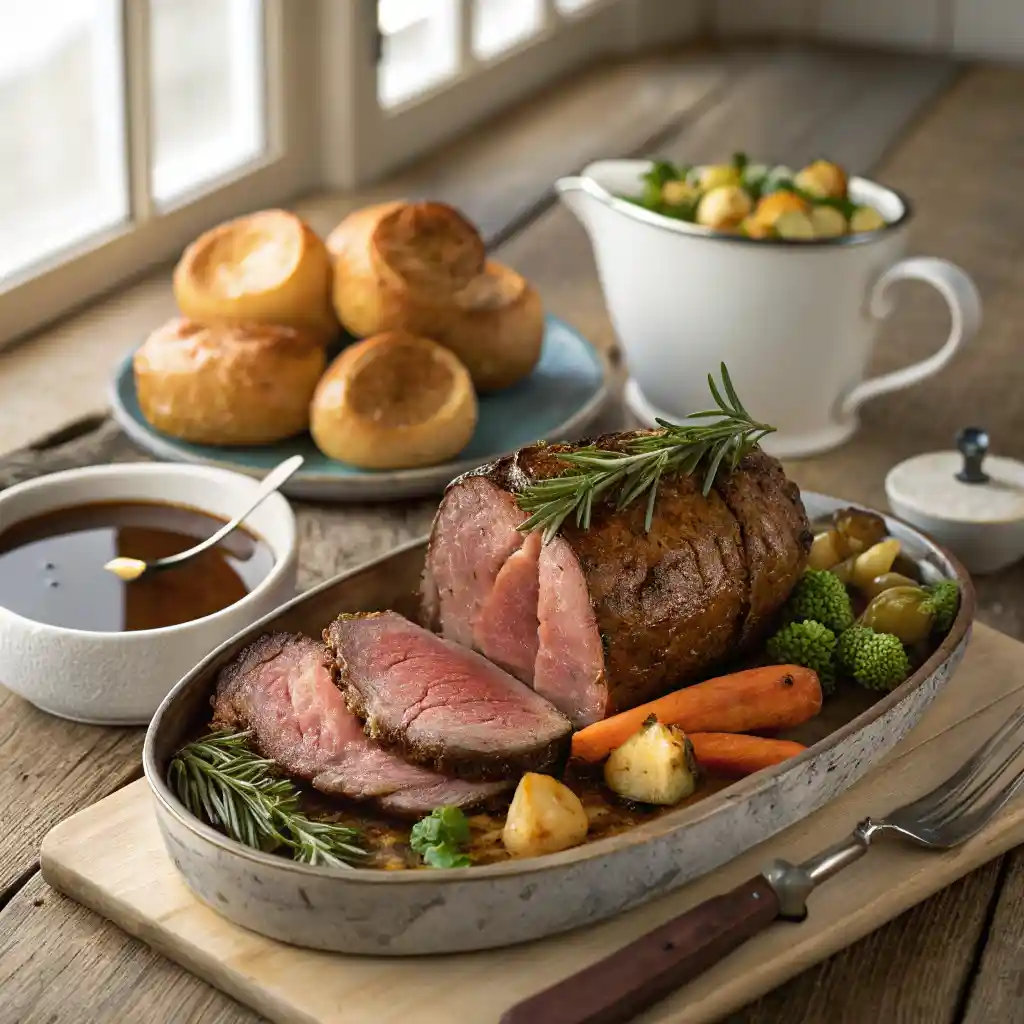
Let’s talk about the magnificent centerpiece of our Sunday Roast Dinner: the beef! I’m using a generous 3-pound beef rump or round roast for this recipe, seasoned simply but effectively.
Ingredients:
- 3 pounds (1.4kg) beef rump or round roast (see note below for selection)
- 1 tablespoon vegetable oil
- 3 teaspoons salt
- 2 teaspoons ground black pepper
- 1 tablespoon fresh rosemary, finely chopped
Try my juicy baked chicken tenderloins for the same crispy finish in less time.
Instructions:
First, preheat your oven to 400°F (200°C). Gently coat the entire beef roast with vegetable oil. Then, sprinkle the salt, pepper, and finely chopped rosemary evenly all over, ensuring every surface is seasoned. Heat a sturdy cast iron skillet or another oven-proof skillet over medium-high heat on your stovetop. Carefully place the seasoned beef into the hot skillet and sear it on all sides until beautifully browned. This step is crucial for locking in those delicious juices. Once seared, transfer the beef, still in the skillet or a roasting dish, into the preheated oven. For a rare roast, cook for 15 minutes per pound; for medium, aim for 20 minutes per pound. (See note for beef selection guidance).
Crispy, Golden Roast Potatoes: The Secret to Perfection
Ah, the humble potato, transformed into a golden marvel! These aren’t just any roast potatoes; they’re the kind that boast a shatteringly crisp exterior and a cloud-like, fluffy interior. This is a crucial element of any stellar Sunday Roast Dinner.
Ingredients:
- 6 tablespoons vegetable oil, vegetable shortening, or reserved beef fat
- 6 to 8 medium yellow or gold potatoes, peeled and cut into wedges
- ½ teaspoon salt
Instructions:
While the beef roasts, heat 6 tablespoons of fat in a high-sided roasting pan in the oven. Par-boil peeled potato wedges for 3–4 minutes, drain, and shake in a colander to roughen the edges for maximum crispiness. Carefully toss the potatoes in the hot fat, season with salt, and roast in a single layer for 40–45 minutes, turning occasionally until golden brown and tender.
Fluffy and Puffed Yorkshire Puddings
No Sunday Roast Dinner is complete without these magnificent, golden domes! My recipe ensures they puff up like little clouds and are perfectly crisp on the outside, a delightful contrast to the tender roast beef.
Ingredients:
- ½ cup (74 grams) all-purpose flour
- ¼ teaspoon salt
- 2 large eggs, at room temperature
- ½ cup (118 ml) whole milk, slightly warmed
- 12 teaspoons vegetable oil/vegetable shortening or fat from beef roast
Instructions:
First things first, let’s prepare the batter. In a large bowl, whisk together the all-purpose flour and salt. Gradually drizzle in the slightly warmed whole milk while whisking continuously until you achieve a smooth, lump-free batter. Then, whisk in the room-temperature eggs until fully incorporated. Now, for the secret to their amazing rise: cover the bowl and refrigerate the batter for at least 30 minutes. This chilling period is essential.
After roasting the beef, increase the oven to 425°F (220°C). Place 1 teaspoon of fat (beef drippings or oil) into each cup of a 12-cup muffin tin and heat for 10 minutes until smoking hot. Quickly pour chilled batter into the cups (filling one-third full) and bake for 15–20 minutes until puffed and golden. Do not open the oven door during baking to ensure they rise fully.
Rich and Flavorful Homemade Gravy
A truly exceptional Sunday Roast Dinner needs a gravy that sings. This recipe focuses on building deep flavor using the pan drippings and a simple roux, resulting in a velvety smooth, rich gravy.
Ingredients:
- 3 tablespoons unsalted butter
- 1 yellow onion, cut into thin slices
- 3 tablespoons all-purpose flour
- 3 cups (709 ml) beef broth/stock
Instructions:
Melt butter over medium heat and sauté sliced onions until translucent (5–7 minutes). Whisk in flour and cook for one minute to remove the raw taste. Gradually whisk in beef broth, simmering until thickened to your preference. Season with salt and pepper; strain for a smoother consistency if desired.
A Medley of Delicious Sunday Roast Vegetables
No Sunday Roast Dinner is complete without a vibrant ensemble of vegetables! While the recipe focuses on the core components, here are some of my favorite additions and how to prepare them for maximum flavor and perfect texture:
- Roasted Root Vegetables: Toss parsnips, carrots, and sweet potatoes with a little olive oil, salt, pepper, and perhaps some thyme. Roast them alongside your potatoes until tender and caramelized.
- Steamed Greens: Brussels sprouts, broccoli florets, or green beans are fantastic steamed until tender-crisp. A knob of butter or a drizzle of olive oil and a pinch of salt is all they need.
- Creamy Mashed Potatoes: If you’re not going for roasties, classic creamy mashed potatoes are always a winner.
- Glazed Carrots: Simmer carrots in a little butter, water, and a touch of sugar or honey until tender and glazed.
- Cauliflower Cheese: A decadent, comforting side that’s always a hit, especially during cooler months.
Roast your root vegetables for about 30-40 minutes at 400°F (200°C), and steam greens for 5-8 minutes. The goal is tender-crisp, vibrant vegetables that add color and freshness to your plate.
Classic Sunday Roast Accompaniments
To truly elevate your Sunday Roast Dinner, consider these classic accompaniments that add layers of flavor and texture:
- Mint Sauce: Particularly delightful with lamb, its bright, fresh flavor cuts through the richness of the meat beautifully.
- Apple Sauce: A sweet and tangy counterpoint, especially wonderful with roast pork.
- Cranberry Sauce: While often associated with turkey, its tartness can be a lovely addition to beef or pork as well.
- Horseradish Sauce: A creamy, pungent sauce that adds a spicy kick, especially good with beef.
- Chutneys: A robust onion chutney or a fruity plum chutney can add a complex sweetness and tang to any roast.
These little extras transform a great meal into an unforgettable one!
Timing is Everything: A Seamless Sunday Roast Dinner Plan
Orchestrating a Sunday Roast Dinner can feel like a culinary ballet, but with a little planning, it’s totally manageable! The key is to think about what can be prepped ahead.
Prep Ahead (Saturday or Sunday Morning):
- Beef: Season the beef and let it sit, covered, in the fridge.
- Potatoes: Peel and cut potatoes, then store them submerged in cold water in the fridge to prevent browning.
- Yorkshire Pudding Batter: Make the batter and keep it chilled in the refrigerator. This actually improves the texture!
- Vegetables: Wash and chop any vegetables you plan to serve.
Sample Timeline (Assuming a 5 PM Dinner):
- 3:00 PM: Preheat oven to 400°F (200°C). Season the beef and sear it. Place beef in the oven.
- 3:15 PM: Put the fat/oil for the potatoes in its roasting pan into the oven to preheat. Par-boil the potatoes.
- 3:45 PM: Drain and rough up the potatoes. Carefully add them to the hot fat in the roasting pan and return to the oven.
- 4:15 PM (approx.): Beef should be nearing completion. Remove it to a platter to rest, tented with foil. Turn oven up to 425°F (220°C).
- 4:20 PM: Place the muffin tin with fat for the Yorkshire puddings into the hot oven to heat. Make the gravy base by sautéing onions.
- 4:30 PM: Pour Yorkshire pudding batter into the hot tin and bake. Finish the gravy by adding flour and stock, simmering until thickened. Add vegetables to roast or steam.
- 4:45 PM: Remove Yorkshire puddings from the oven. Check potatoes and vegetables. Carve the rested beef.
- 5:00 PM: Serve your magnificent Sunday Roast Dinner!
How to Carve Your Perfect Roast
Carving a beautiful roast beef might seem intimidating, but it’s a straightforward skill to master for your Sunday Roast Dinner.
- Rest the Meat: Ensure your beef has rested for at least 15-20 minutes after cooking. This allows the juices to redistribute, making it more tender and easier to carve.
- Position the Roast: Place the roast on a sturdy cutting board, preferably one with a groove to catch juices. Position it so the grain of the meat runs horizontally across the board from your perspective.
- Make the First Cut: Use a long, sharp carving knife. Slice off a thin end piece parallel to the board, exposing the meat’s interior.
- Slice Against the Grain: For tender slices, cut against the grain of the meat. Hold the roast steady with a carving fork (insert it gently, don’t pierce the meat aggressively). Make thin, even slices by drawing the knife back towards you in a smooth motion.
- Thickness: Aim for slices about ¼-inch thick. Thicker cuts are fine if you prefer, but thinner slices tend to be more tender.
- Serving: Arrange the slices attractively on a warmed platter.
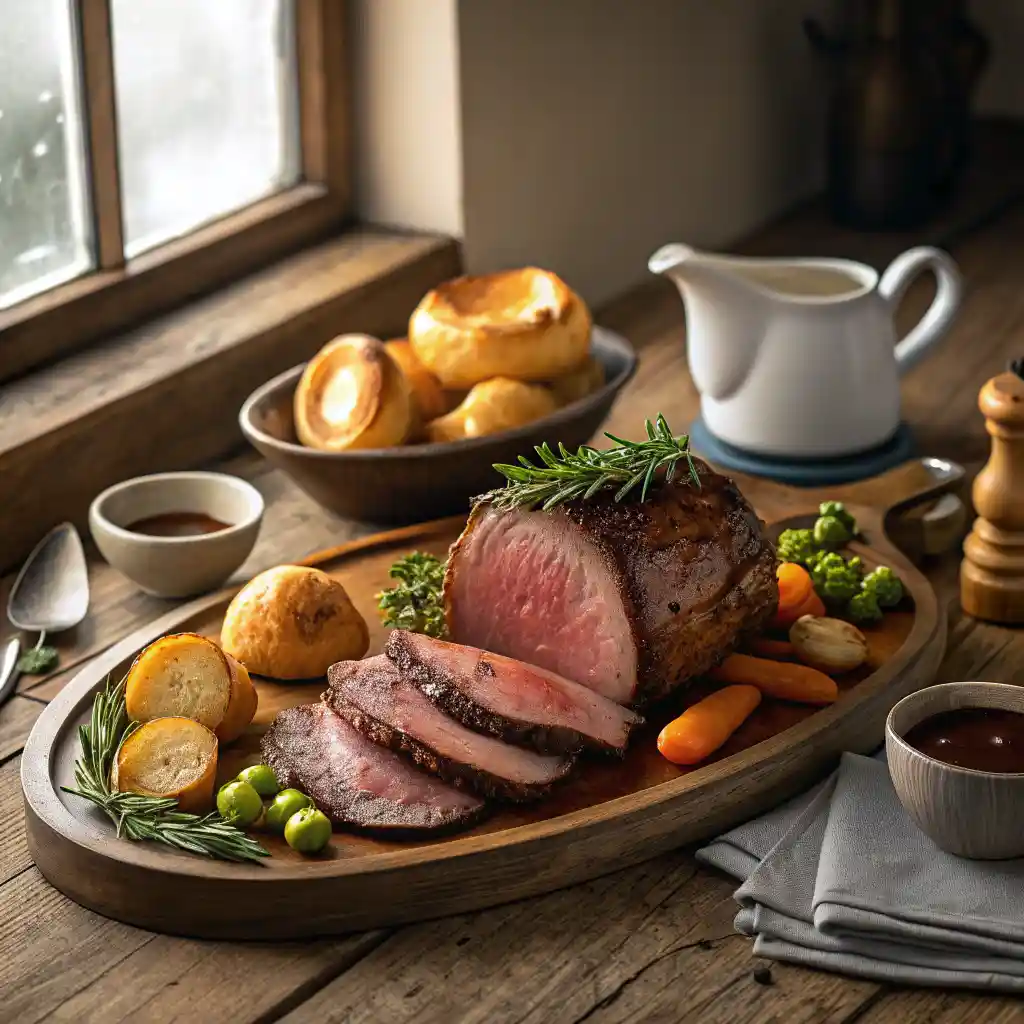
Presentation is Key: Serving Your Sunday Roast Dinner with Flair
The final flourish for your Sunday Roast Dinner is presentation! A beautifully arranged platter makes the meal even more inviting.
- The Platter: Use a large, warmed platter for the carved roast beef. Fan the slices slightly, overlapping them gently.
- Garnish: Tuck some fresh rosemary sprigs or parsley around the beef for a pop of color.
- Sides: Arrange the glistening roast potatoes, golden Yorkshire puddings, and vibrant vegetables in separate bowls or directly on the platter around the meat.
- Gravy: Serve the rich gravy in a gravy boat, allowing everyone to add as much as they desire.
- Table Setting: Use your best linens, glassware, and cutlery. Light a candle or two for extra ambiance. A simple vase with flowers can also add a lovely touch.
Delicious Ways to Enjoy Your Sunday Roast Dinner Leftovers
Don’t let those delicious leftovers from your Sunday Roast Dinner go to waste! They’re the start of many more tasty meals:
- Sandwiches: Thinly slice the leftover beef for hearty sandwiches with gravy-soaked bread (a “roast beef sandwich” or “French dip” style).
- Shepherd’s Pie/Cottage Pie: Chop the beef and mix with vegetables and gravy, then top with mashed potatoes for a classic comforting pie.
- Hash: Dice the roast beef and potatoes, then pan-fry with onions and maybe a fried egg on top for a hearty breakfast or brunch.
- Soup or Stew: Add diced beef to a hearty vegetable soup or a rich beef stew for extra flavor and protein.
- Savory Pies: Use the meat and any leftover gravy as a filling for savory pies or pasties.
Troubleshooting Common Sunday Roast Dinner Dilemmas
Even the best home cooks face hiccups! Here are solutions for common Sunday Roast Dinner challenges:
- Potatoes Not Crispy: Ensure the fat was smoking hot before adding the par-boiled, roughed-up potatoes. Don’t overcrowd the pan; give them space. Try roasting at a slightly higher temperature for the last 15 minutes.
- Yorkshire Puddings Not Rising/Deflating: Make sure the batter was well-chilled, the fat was smoking hot, and do not open the oven door until they are fully puffed and golden.
- Gravy Lumpy/Too Thin/Too Thick: For lumps, whisk vigorously or strain. If too thin, simmer longer or make a slurry (1 tbsp cornstarch/flour with 2 tbsp cold water) and whisk in. If too thick, thin with more beef broth or water.
- Roast Meat Overcooked/Undercooked: Use a meat thermometer for accuracy (130-135°F for rare, 140-145°F for medium-rare beef). Always factor in resting time, as the temperature will continue to rise.
Dietary Adaptations for Your Sunday Roast Dinner
Creating a delicious Sunday Roast Dinner for everyone is possible!
- Vegetarian/Vegan Main: Replace the beef with a hearty nut roast, lentil loaf, or a store-bought plant-based roast alternative. Many recipes are readily available online.
- Vegetarian Gravy: Use a rich vegetable broth instead of beef broth. You can also add umami boosters like soy sauce or Marmite (check vegan status if needed) and sautéed mushrooms for depth.
- Gluten-Free Yorkshire Puddings: Substitute the all-purpose flour with a gluten-free flour blend specifically designed for baking. Ensure your baking powder is also gluten-free.
- Vegetables: Most roasted and steamed vegetables are naturally gluten-free and vegan. Ensure no butter or non-vegan sauces are used if catering to those needs.
Frequently Asked Questions About Sunday Roast Dinner
Why is it called a Sunday roast? Historically, families would cook a large joint of meat in the oven before attending church, so a roast meal was ready upon their return on a Sunday. It became a cherished weekly tradition.
What’s the best meat for a Sunday roast? Beef is a classic favorite, but lamb leg, pork loin, and whole chicken are also popular and delicious choices, each offering a unique flavor profile.
How long should I rest my roast? Always rest your roast for at least 15-20 minutes (or longer for larger cuts) after cooking. This allows the juices to redistribute, resulting in more tender and flavorful meat.
Can I make Yorkshire pudding batter ahead of time? Yes! Chilling the batter for at least 30 minutes, or even overnight, actually helps create more tender and better-rising Yorkshire puddings for your Sunday Roast Dinner.
Conclusion: Gather ‘Round for the Perfect Sunday Roast Dinner!
Designed to be savored, this Sunday Roast nourishes both body and soul while bringing cozy comfort to your table. I’d love to see your results—please share your experiences, questions, and photos in the comments below to keep this delicious tradition alive.
YOU CAN FOLLOW US ON PINTEREST