I grew up thinking fancy pies belonged to bakery cases, not busy home kitchens. Then I cracked the code on lemon meringue pie, and now I bake it whenever we need a bright, celebratory dessert. This classic stunner layers a silky, tart lemon filling under a cloud of toasty meringue, all tucked into a buttery crust. You can pull it off with about 1 hour of active time, plus cooling and chilling. I’ll walk you through everything so your pie slices up clean and proud.
Table of Contents
Why You’ll Love This Lemon Meringue Pie
- Bright, balanced citrus flavor meets soft, marshmallowy meringue and flaky crust.
- Straightforward steps that reward you with bakery-quality results at home.
- No special tools beyond a whisk and a mixer, so beginners can nail it.
- Sturdy, sliceable lemon custard that holds together without turning gummy.
- Smart technique prevents weeping, so your pie stays picture-perfect longer.
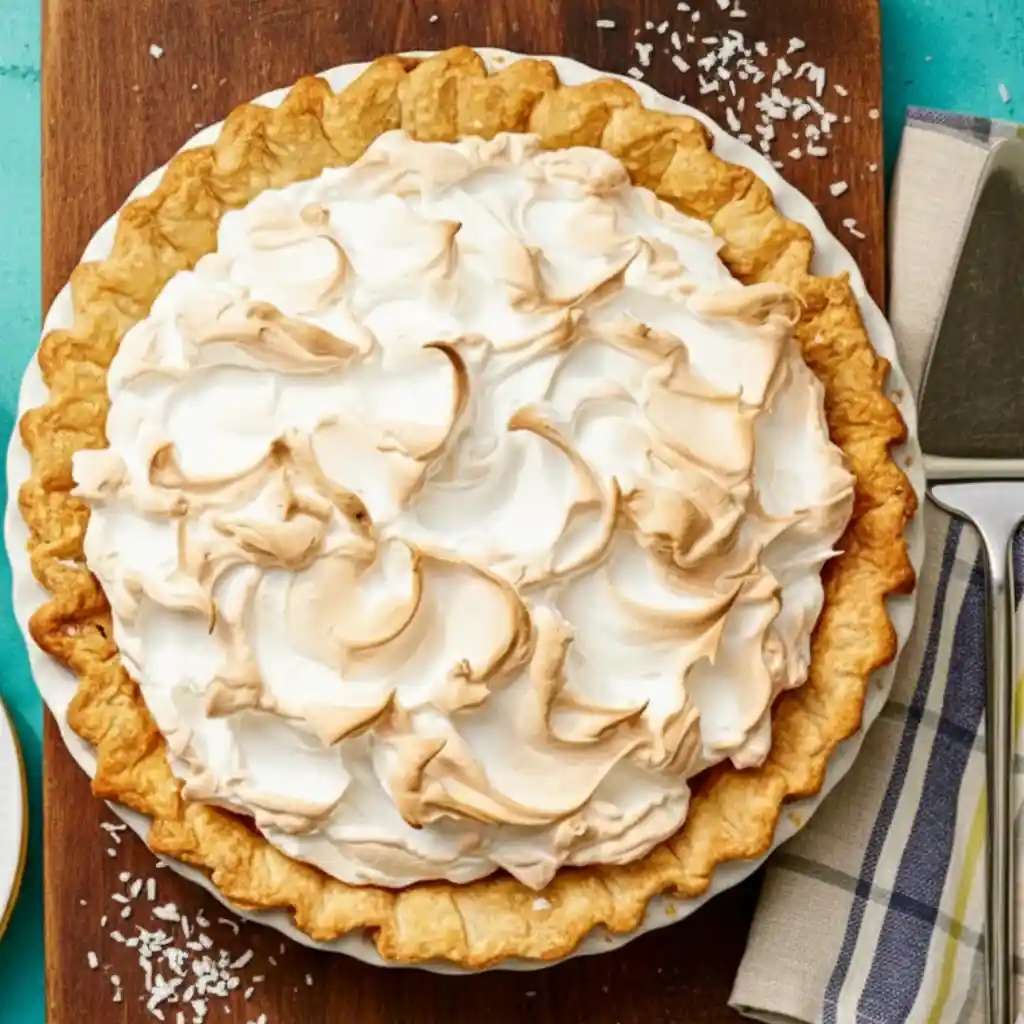
Irresistible Lemon Meringue Pie: A Delicious Triumph
Ingredients
Equipment
Method
- Mix and chill your pie dough at least 2 hours, or make it the night before. Cold dough prevents shrinkage. Preheat the oven to 375°F (190°C) and adjust the rack to the lowest position. Roll out the dough into a 9-inch pie dish and crimp or flute the edges firmly. Line with parchment and fill with pie weights. Bake until the edges set. Remove weights and parchment, then bake until the bottom looks dry and lightly golden. You want a partially blind baked shell. Reduce oven temperature to 350°F (177°C) and keep the crust warm.
- In a bowl or large measuring cup, whisk 5 egg yolks. Set aside. In a medium saucepan over medium heat, whisk water, sugar, cornstarch, salt, lemon juice, and zest. The mixture looks thin and cloudy at first, then after about 6 minutes, it thickens and bubbles. Reduce heat to low. Slowly stream a few spoonfuls of the hot lemon mixture into the yolks while whisking constantly to temper. Slowly whisk the tempered yolks back into the saucepan. Turn heat to medium. Cook until thick and big bubbles burst at the surface. Remove from heat and whisk in butter. Immediately spread the hot filling into the warm crust. Keep it warm so the meringue seals to it and prevents separation.
- Add egg whites and cream of tartar to a clean bowl. With a hand mixer or stand mixer and whisk attachment, beat on medium for 1 minute. Increase to high and whip to soft peaks, about 4 minutes. Gradually add sugar and salt while mixing. Continue on high until stiff, glossy peaks form, about 2 minutes more. Spread meringue over the warm filling. Push it all the way to the crust to seal the edges. Use the back of a spoon to create swoops and peaks for a dramatic crown.
- Bake the pie on the lowest oven rack at 350°F (177°C) for 20 to 25 minutes. If the meringue browns too quickly, tent with foil without touching the peaks. Cool on a wire rack for 1 hour, then chill for 4 hours before slicing. Enjoy on day 1 for best texture. The meringue naturally softens with time, so serve promptly.
Notes
- Crust Shortcut: For a quicker prep, a store-bought 9-inch pie crust works beautifully with this recipe.
- Prevent Weeping: The key to a picture-perfect meringue is to spread it over the lemon filling while the filling is still hot. This creates a seal and prevents a watery layer from forming between the filling and the topping.
- For Clean Slices: Patience is essential! For those clean, bakery-quality slices, be sure to chill the pie for at least 4 hours before serving.
- Storing Your Pie: This lemon meringue pie has the best texture and appearance on the day it is made. Store any leftovers in the refrigerator for up to 2 days. To protect the meringue, cover it with a domed lid or an inverted bowl rather than plastic wrap.

Ingredients You’ll Need
You can use your favorite crust, then mix a glossy lemon filling and a stable meringue. I list exact amounts so you can make this lemon meringue pie with confidence.
Pie Crust
- Homemade Pie Crust*
Notes and options:
- Use an all-butter crust for flavor or a butter-shortening blend for extra tenderness.
- Store-bought 9-inch refrigerated or frozen pie crust works if you prefer a shortcut.
Lemon Filling
- 5 large egg yolks
- 1 and 1/3 cups (320 ml) water
- 1 cup (200 g) granulated sugar
- 1/3 cup (38 g) cornstarch
- 1/4 teaspoon salt
- 1/2 cup (120 ml) fresh lemon juice
- 1 tablespoon lemon zest
- 2 tablespoons (28 g) unsalted butter, softened
Meringue Topping
- 5 large egg whites, at room temperature
- 1/2 teaspoon cream of tartar
- 1/2 cup (100 g) granulated sugar
- 1/8 teaspoon salt
Cream of tartar helps egg whites whip up faster and stay stable, which keeps your meringue tall and glossy. You might also enjoy trying out a gingerbread dessert that perfectly suits holiday occasions.
How to Make the Perfect Lemon Meringue Pie
This method keeps each component simple while delivering that bakery look. If you multitask, you can work on the filling while the crust blind bakes. If that stresses you, bake the crust first, then move on.
Step 1: Preparing and Blind Baking the Pie Crust
- Mix and chill your pie dough at least 2 hours, or make it the night before. Cold dough prevents shrinkage.
- Preheat the oven to 375°F (190°C). Adjust the rack to the lowest position.
- Roll out the dough into a 9-inch pie dish. Crimp or flute the edges firmly.
- Line with parchment and fill with pie weights. Bake until the edges set. Remove weights and parchment, then bake until the bottom looks dry and lightly golden. You want a partially blind baked shell.
- Reduce oven temperature to 350°F (177°C). Keep the crust warm.
Step 2: Making the Lemon Filling
- In a bowl or large measuring cup, whisk 5 egg yolks. Set aside.
- In a medium saucepan over medium heat, whisk water, sugar, cornstarch, salt, lemon juice, and zest. The mixture looks thin and cloudy at first. After about 6 minutes, it thickens and bubbles.
- Reduce heat to low. Slowly stream a few spoonfuls of the hot lemon mixture into the yolks while whisking constantly to temper.
- Slowly whisk the tempered yolks back into the saucepan. Turn heat to medium. Cook until thick and big bubbles burst on the surface.
- Remove from heat and whisk in butter. Immediately spread the hot filling into the warm crust. Keep it warm so the meringue seals to it and prevents separation in your lemon meringue pie.
Step 3: Preparing the Meringue
- Add egg whites and cream of tartar to a clean bowl. With a hand mixer or stand mixer and whisk attachment, beat on medium for 1 minute.
- Increase to high and whip to soft peaks, about 4 minutes.
- Gradually add sugar and salt while mixing. Continue on high until stiff, glossy peaks form, about 2 minutes more.
- Spread meringue over the warm filling. Push it all the way to the crust to seal the edges. Use the back of a spoon to create swoops and peaks for a dramatic lemon meringue pie crown.
Step 4: Assembling and Baking the Pie
- Bake the pie on the lowest oven rack at 350°F (177°C) for 20 to 25 minutes. If the meringue browns too quickly, tent with foil without touching the peaks.
- Cool on a wire rack for 1 hour, then chill for 4 hours before slicing.
- Enjoy on day 1 for best texture. The meringue naturally softens with time, so serve your lemon meringue pie promptly. For more satisfying baking, try these rich chocolate mousse brownies for an equally delightful treat.
The Science of Lemon Meringue Pie
Cornstarch thickens through gelatinization. When you heat it with water and sugar, starch granules swell and trap moisture, creating that silky, sliceable lemon custard. Flour can taste pasty and turn cloudy, so cornstarch delivers a cleaner flavor and shine.
Tempering eggs protects them from scrambling. You slowly introduce heat so the yolks warm up gently, then you return them to the pot to finish thickening the filling.
Cream of tartar lowers the pH of egg whites, which strengthens the protein network. That gives your meringue structure and keeps the peaks tall. Chemistry of Cooking explains these chemical interactions in greater detail.
Spreading meringue on hot filling matters. Heat helps the meringue cook from below and seal to the custard, which minimizes weeping and separation in lemon meringue pie.
Keys to Success
- Keep everything hot when it needs to be. Warm crust, hot filling, freshly whipped meringue. Heat helps layers bond.
- Whisk constantly once the custard thickens. That prevents scorching and keeps the texture smooth.
- Seal the meringue to the crust. Touch the edges so steam can’t sneak out and cause beads.
- Bake on the low oven rack. Gentle, even heat browns the top while setting the center.
- Chill completely before slicing. You’ll get tidy wedges and a confident lemon meringue pie reveal.
Meringue Types Explained
Not all meringues behave the same. Here’s a quick guide so you can choose wisely.
| Meringue Type | How You Make It | Stability | Flavor/Texture | Best For |
|---|---|---|---|---|
| French | Whip whites with sugar; no heat | Moderate | Light, airy, classic | Quick pies, soufflés |
| Swiss | Warm whites and sugar over a bain-marie, then whip | High | Silky, tight crumb | Frosting, sturdy toppings |
| Italian | Stream hot sugar syrup into whipping whites | Very high | Marshmallowy, glossy | Layer cakes, humid climates |
For this pie, I recommend French meringue with cream of tartar. It delivers that nostalgic, fluffy bite and toasts beautifully. If humidity runs high or you need extra insurance, Swiss meringue gives more stability with only a little more effort.

How to Make Ahead and Store Lemon Meringue Pie
You can prep parts ahead. Make and chill pie dough up to 2 days or freeze it for a month. Blind bake the crust earlier in the day. Whisk lemon filling right before assembly so it stays hot for the meringue seal.
Store leftovers covered in the fridge for up to 2 days. The meringue softens over time, so enjoy on day 1 when your lemon meringue pie looks and tastes its best. Avoid plastic wrap touching the meringue. A domed cover or inverted bowl works better.
Conclusion
You’ve got this. With a few smart techniques, you can bake a lemon meringue pie that slices neat, tastes bright, and makes everyone at the table beam. If you try it, leave a comment and tell me how it went, or tag me with your pie photos so I can cheer you on. Questions or tweaks you want to try next time? Ask away. We’re learning together, one cozy bake at a time.
Frequently Asked Questions
Why does meringue weep?
Moisture condenses when you top a cool filling or underbake. Spread meringue over hot filling and bake until set to protect your lemon meringue pie.
My filling turned runny. What happened?
You likely undercooked the cornstarch or mismeasured it. Cook until thick bubbles burst and the mixture looks glossy.
How do I know I have stiff peaks?
Lift the whisk and check that peaks stand straight with tips that don’t droop. The meringue should look shiny, not grainy.
Can I use bottled lemon juice?
Fresh lemon juice tastes brighter and cleaner. Bottled can work in a pinch, but zest becomes essential for fresh flavor.
Why did my crust shrink?
Warm dough and under-chilled fat cause shrinkage. Chill the dough, crimp firmly, and bake on the lowest rack.